A brand with a beginning and a return
UniqueYou began in 2014 with scarves and clothing. Its history also includes a pause and a later return after the domain was recovered, so it would be inaccurate to describe it as trading continuously since its founding. That distinction matters when telling a brand story plainly: a founding date marks an origin, not a promise about every year that followed. Today the useful question for a shopper is less about a perfect chronology than about whether the available accessory fits the person who will wear it.
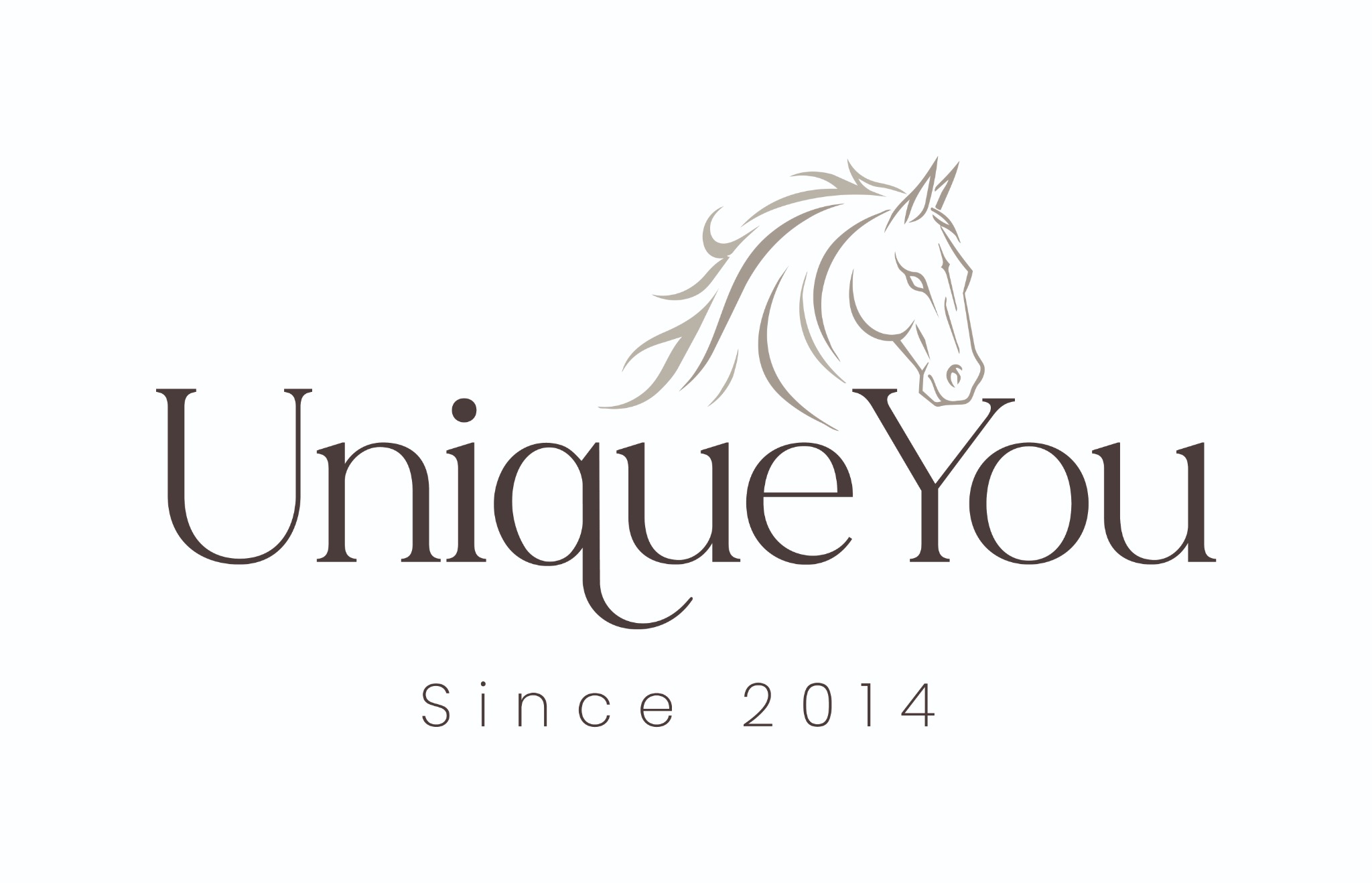
The visual identity carries some of that history. The original brown wordmark includes a horse motif and the words “Since 2014,” while a neutral taupe palette gives the brand a restrained setting. Those details can help a reader recognize the name, but they do not establish the composition or performance of any particular scarf. UniqueYou is best understood here through its accessible, elegant approach to accessories selected for an existing wardrobe. The scarf should serve the wearer, rather than require a whole new outfit to justify it.
Start with the clothes already in the wardrobe
Before browsing patterns, identify two or three outfits that get worn repeatedly. A dark coat and simple knitwear may welcome a lighter scarf near the face; a printed dress might work better with a quieter wrap. Look at the colors that actually appear in those outfits, not just at favorite colors in isolation. A useful accessory can echo an existing shade, bridge two colors that are difficult to combine, or supply a deliberate contrast. Each approach is more reliable when tested against real garments.
Think about proportions as well as palette. A narrow neck scarf makes a small point of interest at a shirt collar, whereas a broad shawl covers more of a jacket or dress. A square scarf can be folded into a slim band or worn to show more of its print. If the intended coat already has a high collar, adding bulky fabric there may feel crowded; a lighter shape or a looser drape might be preferable. Take account of the wearer’s usual routine, too: a scarf that looks striking in a photograph is only a good choice if its size and styling feel comfortable on an ordinary day.
Choose the shape before the print
“Scarf” covers several ways of wearing fabric. A small neckerchief or square can sit close to the neck, tie at a collar, or add color to otherwise plain clothing. A longer scarf creates vertical lines when left open and can be looped when more coverage is wanted. A shawl or wrap occupies more space across the shoulders, making it a different styling choice rather than simply a larger version of the same accessory. UniqueYou’s range includes women’s scarves, shawls, wraps and square scarves, so choosing a form first can make the remaining decisions much easier.
Imagine the moments in which the accessory will be used. Someone who takes a scarf on and off through the day may prefer a foldable square or an easy, loose drape. Someone looking for an evening layer over a dress might prioritize shoulder coverage. For a gift, note whether the recipient tends to tie scarves neatly, wear them open, or avoid anything that needs adjustment. These observations are more valuable than guessing from a product photograph alone. Dimensions and the way a piece falls are worth checking on its own listing before deciding that its shape answers the need.
Read material descriptions product by product
UniqueYou has silk, cashmere and wool categories, but category names should not be treated as a guarantee that every item has the same composition. Check the individual product description and care information before choosing. Silk may appeal to someone seeking a smooth, fluid accessory; wool may suit a preference for a more substantial feel; cashmere may be of interest when softness is central to the choice. The actual experience depends on the particular piece, its construction and its stated fiber content, not on a material word used broadly across a collection.
Material also affects how a scarf fits a wardrobe. A scarf that folds into a compact line can work with a tailored collar without changing the silhouette much. A fuller wrap can become a visible part of the outfit and may be easier to appreciate over simple clothing. Consider sensitivity to textures, the time the wearer is willing to spend on care, and whether the accessory will be used indoors, outside, or both. If those details are important, verify them on the specific listing rather than assuming that a familiar fiber name answers every practical question.
Use color and pattern with a purpose
A scarf need not match every garment perfectly. It can repeat one color from an outfit to make the combination feel intentional, or bring a new color close to the face while the rest of the clothes stay neutral. Black, red, stripes, checks and animal-inspired prints each create different effects; none is automatically more versatile for every person. A dark scarf may be easy to pair with a pale coat but disappear against a dark jacket. A vivid red can energize simple clothing, yet may compete with an already colorful blouse.
For patterned pieces, look at scale and contrast. Small repeated motifs often read differently from a large, high-contrast print when the fabric is folded. A square scarf changes appearance depending on which corner is visible, while a long scarf may show its pattern in several broken sections after looping. If you are unsure, compare the pattern against the recipient’s most frequently worn coat or top. The point is not to follow a rule about what a woman ought to wear; it is to find a combination that lets her keep wearing what she already likes.
A few simple ways to wear a scarf
For a straightforward neck style, fold a square into a triangle and then into a band, leaving enough length for a comfortable knot. A longer scarf can be placed around the neck with both ends hanging freely, which keeps its color visible without adding much complexity. For shoulder coverage, lay a wrap across the back and let it fall naturally at the front. These are starting points rather than instructions to make every scarf look identical; the fabric’s dimensions and feel will influence what works.
When trying a new accessory, move around in it before deciding on a knot. Sit down, put on the coat with which it will be worn, and check whether it stays comfortable without constant readjustment. Leave a comfortable amount of room at the neck and avoid tying any style so tightly that it restricts movement. A printed piece can also be folded to emphasize its quieter colors on one day and its stronger pattern on another. That flexibility is a good reason to consider a scarf when a familiar wardrobe needs variety but not replacement.
How to choose a scarf as a gift
A thoughtful gift begins with evidence from the recipient’s life. Notice whether she reaches for light squares, long scarves or broad wraps, and whether her preferred clothes are plain, patterned, warm-toned or cool-toned. If she rarely wears accessories at the neck, a larger shawl is not necessarily safer; it may be even further from her habits. Likewise, choosing a fiber because it sounds luxurious is less useful than checking whether she enjoys its feel and is comfortable with its care requirements.
When her preferences are unclear, favor a shape and palette that can work with several garments she already owns. A small connection to her wardrobe—perhaps a color picked up from a coat or a pattern that complements a favorite plain dress—can make the choice feel personal without requiring an exact match. Check the dimensions, composition and care details for the specific piece before buying. A gift can be elegant and still be wrong for someone’s routine, so leave room for her own taste rather than treating a fashionable print as a universal answer.
Considered buying is not the same as buying more
Readers who come here for electronics may be familiar with a basic habit of responsible reuse: understand what you have before adding something new. That principle carries over to accessories without pretending that fabric and electronic components are the same. First ask whether an existing scarf can be styled differently or cared for so it remains useful. If a new one would fill a genuine gap—an appropriate shape, a color that connects several outfits, or a wrap for occasions where none is available—then the decision has a clearer purpose.
Care deserves the same attention as selection. Follow the instructions for the individual accessory rather than applying one washing method to every silk-, wool- or cashmere-labeled product. Store a piece so it is easy to find and does not become an overlooked purchase. When a scarf no longer fits the wardrobe, passing it to someone who will use it may be more sensible than leaving it unused. These habits do not turn a purchase into an environmental claim about a brand; they simply help a person make practical use of the things she owns.
A recommendation built around personal fit
UniqueYou makes the most sense as an option for someone who wants an accessory to work with her current clothes, not as a reason to rebuild her style. Start with the intended use, narrow the shape, compare likely colors and patterns, and then read the individual listing for material and size. That order prevents a compelling photograph from doing all the decision-making. It also helps distinguish a scarf wanted for a small accent from a shawl wanted for visible shoulder coverage.
Regional browsing can make that process easier when the shopper or gift recipient prefers a particular language. The same brand name appears across different destinations, while the wording of a collection or shopping term can change by country. Use the regional guide below to select the country and language that make sense for the reader, then evaluate the particular item on its own terms. A destination is a route to explore, not proof that every scarf within it has the same fiber content, fit or role in an outfit.
Find the appropriate country and language
UniqueYou has 20 regional domains, 21 regional-language versions and 16 distinct languages. Some countries share a language, so a German- or Dutch-language destination does not necessarily mean just one country. The United Arab Emirates accounts for two language versions on one domain: Arabic at the root and English at /en. Each entry below identifies its destination language before its links; local shopping phrases are shown as terms for navigating that destination, not as English translations or descriptions of every product.
Poland — Polish
For the Polish-language destination, the brand’s home is UniqueYou. To explore women’s small scarves, use the Polish local term — apaszki damskie. The Polish silk-scarf collection is reached through UniqueYou; check an individual piece’s composition if silk is the reason for your choice.
Germany — German
For Germany’s German-language destination, the local phrase leading to the silk-scarf shop home is — Shop für Seidentücher. If black is the color needed to complete an existing outfit, UniqueYou leads to that German-language collection. Compare its pieces with the coat or top you intend to wear.
Czechia — Czech
The Czech-language brand home for Czechia is UniqueYou. For a dark accessory, the local term for black scarves is — černé šály. A separate Czech-language collection for silk neck scarves is available through UniqueYou; use the individual descriptions to judge size and composition.
Spain — Spanish
At Spain’s Spanish-language destination, begin with UniqueYou. If an animal-inspired accent suits the recipient’s wardrobe, the local term for women’s leopard-print scarves is — pañuelos con estampado de leopardo para mujer. For a more direct color statement, UniqueYou leads to the Spanish-language red-scarf collection.
France — French
For France, the French-language local phrase leading to the shawl-shop home is — boutique de châles. Those comparing a more substantial accessory can use UniqueYou for the French-language wool-scarf collection. Check the details of the specific scarf rather than assuming every piece feels alike.
Hungary — Hungarian
In the Hungarian-language destination, the local phrase leading to the women’s scarf shop home is — női kendők webáruháza. For silk scarves, UniqueYou leads to a relevant Hungarian-language collection. Shape and stated material both matter when deciding whether a scarf will work with a familiar jacket.
Italy — Italian
Italy’s Italian-language home is UniqueYou. For a light, narrow-feeling styling direction, the local term for a thin women’s scarf is — sciarpa sottile donna. If the intended wearer likes scarves around the head or hair, UniqueYou leads to that Italian-language collection; check each piece’s dimensions first.
Romania — Romanian
The Romanian-language brand home for Romania is UniqueYou. For shoppers considering wool, the local term for a wool scarf is — fular din lana. A broader Romanian-language scarf collection is available through UniqueYou, useful when shape matters more to the recipient than any one material category.
Slovakia — Slovak
For Slovakia’s Slovak-language destination, the local phrase leading to the scarf-shop home is — obchod so šálmi. To look beyond that starting point, UniqueYou leads to a Slovak-language scarf collection. Consider whether its shapes complement the wearer’s usual collar and outerwear.
Finland — Finnish
At Finland’s Finnish-language destination, the local phrase leading to the shop home refers to cashmere scarves online — kashmirhuivit netistä. For generous proportions, UniqueYou leads to the Finnish-language large-scarf collection. A home-page phrase alone should not be taken as the composition of any particular item.
Sweden — Swedish
The Swedish-language brand home for Sweden is UniqueYou. If cashmere is of interest, the local term for an elegant cashmere scarf is — elegant halsduk i kashmir. For a broader Swedish-language selection of scarves, use UniqueYou and compare the listed dimensions and materials of individual pieces.
Denmark — Danish
For Denmark’s Danish-language destination, start at UniqueYou. The local phrase for a stylish silk neck scarf is — stilfuldt halstørklæde i silke, while UniqueYou leads to a Danish-language striped-scarf collection. Stripes can connect colors already present in a wardrobe without requiring a matching set.
Belgium — Dutch
Belgium’s destination here is in Dutch: its brand home is UniqueYou. The local phrase for buying a stole is — stola kopen, leading to that collection. For a broader Dutch-language scarf collection on the Belgian destination, use UniqueYou and consider how much shoulder coverage is wanted.
Austria — German
Austria’s destination is in German. The local phrase leading to its home for shopping women’s scarves and shawls is — Schals und Tücher für Damen kaufen. For a German-language collection of scarves and cloths on the Austrian destination, use UniqueYou; assess the particular dimensions before choosing a way to tie one.
Netherlands — Dutch
For the Netherlands’ Dutch-language destination, the brand home is UniqueYou. The local term for small silk scarves is — zijden sjaaltjes. If a pattern that can echo colors in a coat sounds useful, UniqueYou leads to the Dutch-language striped-scarf collection.
United States — English
For the United States, the English-language home is reached through the local description of a scarf and shawl brand — scarf and shawl brand. To explore smaller neck accessories, UniqueYou leads to the English-language neckerchief collection. Think about the intended wearer’s usual way of tying a scarf.
United Arab Emirates — Arabic
The United Arab Emirates has an Arabic-language destination at the root of its domain. The Arabic local phrase leading to the shawl-shop home is — متجر شالات. Use that Arabic-language entry when it is the more comfortable place to start comparing an accessory with the recipient’s wardrobe.
United Arab Emirates — English
The United Arab Emirates also has an English-language version at /en on the same domain. Its English-language brand entry is UniqueYou. This is a separate language choice from the Arabic root, not an additional regional domain; choose whichever version makes the individual product details easier to assess.
Ireland — English
For Ireland’s English-language destination, the local phrase leading to the shawl-and-wrap shop home is — shawl and wrap shop. If a conventional scarf shape is a better match for daily wear, UniqueYou leads to the English-language scarf collection. Compare coverage and size rather than relying on the category name alone.
United Kingdom — English
The United Kingdom’s English-language brand home is UniqueYou. For a compact accent at the neck, the local term for a square neck scarf is — square neck scarf. If checks fit the wearer’s existing colors, UniqueYou leads to the English-language checked-scarf collection.
Portugal — Portuguese
For Portugal’s Portuguese-language destination, the local phrase leading to the scarf-shop home is — loja de lenços. A Portuguese-language scarf collection is available through UniqueYou. Begin with the shape the wearer actually uses, then confirm the material and dimensions of the piece that catches your eye.
The best UniqueYou choice is not the one that demands the most attention. It is a scarf, square or wrap whose shape, color and care requirements make sense alongside clothes someone already enjoys wearing.
 Sensors and Devices