Know what is safe to clean
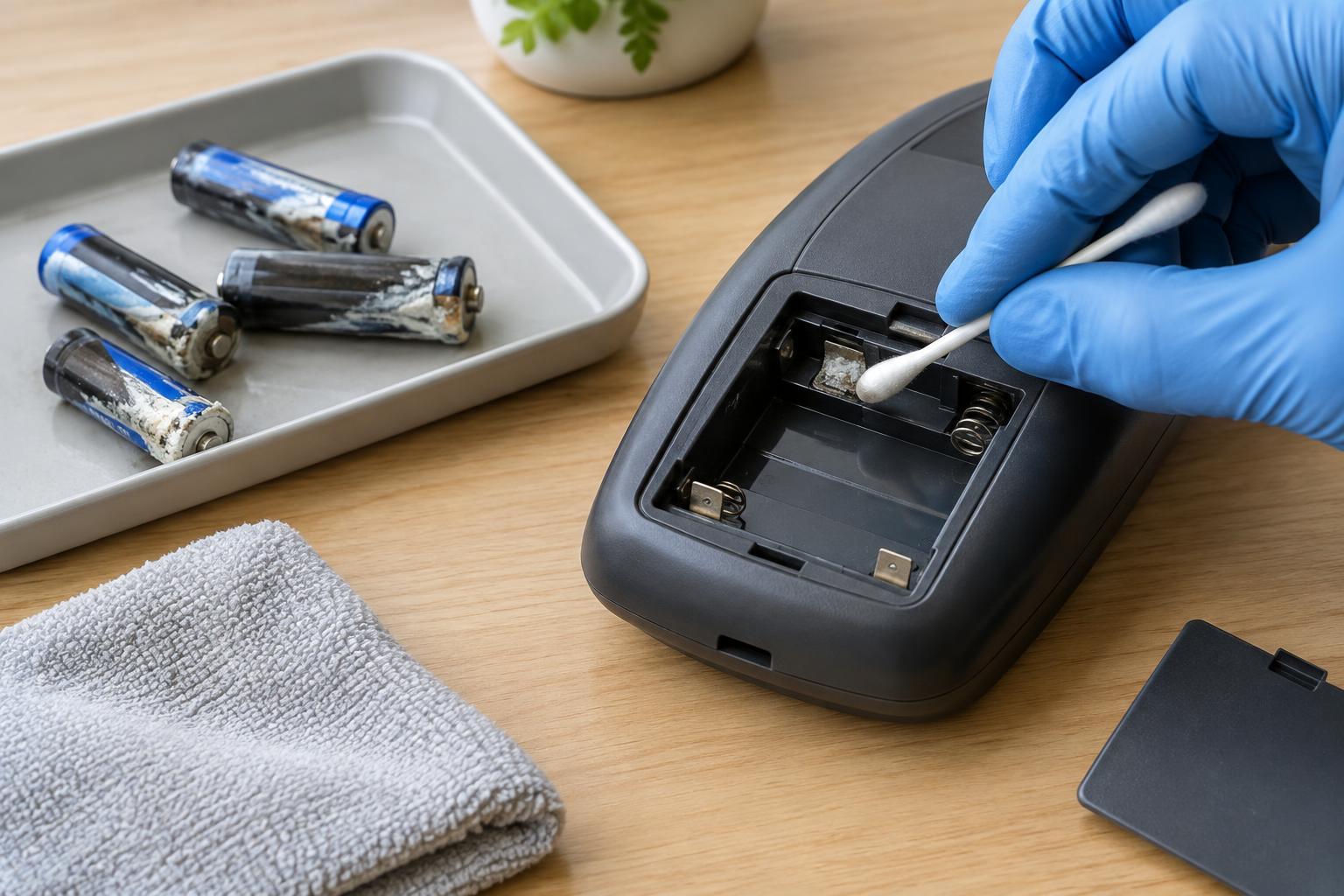
This guide is for an accessible compartment that holds removable alkaline batteries, such as AA or AAA cells. Alkaline leakage can leave a white, powdery or crusty deposit around a battery and its contacts. Treat that residue as irritating and potentially caustic, even if it looks dry. Keep it away from your skin and eyes, and do not blow on it or brush it into the air.
Work only on a device you can completely disconnect from power. Switch it off, unplug any external power lead, and remove the batteries if they come out without force. Do not puncture, heat, recharge, or pry open a leaking cell. If a battery is stuck, hot, swollen, or badly damaged, stop rather than forcing it loose. This procedure is not for lithium-ion packs, button cells, lead-acid batteries, or leakage that has reached wiring or a circuit board. Those situations call for a different assessment, and replacing the device may be the safer choice.
Set up and remove loose residue
Choose a well-lit, ventilated work area away from food and children. Put down a disposable work surface and wear protective gloves and eye protection. Gather cotton swabs, a soft disposable cloth, a small amount of household white vinegar, clean water, and dry swabs or cloths. A toothpick or soft brush may help with stubborn deposits, but avoid metal tools that could gouge contacts or short them together.
Place removed batteries aside where their terminals cannot touch metal objects or each other. If loose powder is present, lift it gently with a slightly damp swab rather than scraping it vigorously. Use light pressure: thin battery contacts can bend or break. Discard used swabs as you go so you do not spread residue onto clean parts of the compartment.
Clean the contacts with minimal liquid
For alkaline leakage on accessible metal contacts, lightly moisten a fresh cotton swab with white vinegar. The swab should be damp, not dripping. Dab the deposit and wipe gently, working in small areas and changing swabs when they become dirty. Vinegar’s mild acidity can help loosen alkaline residue, but it is not a reason to flood the compartment or assume every trace of contamination has been removed. Keep liquid out of seams, switches, speaker openings, and the inside of the device.
When the visible residue is gone, use a new swab barely dampened with water to wipe the treated contacts. Follow with a dry swab or cloth. If the compartment is narrow, take your time rather than pouring anything into it. Do not combine cleaning products, use bleach, or spray cleaner directly onto the device. Wash your hands after removing your gloves, and clean the work surface when finished.
Dry and inspect before testing
Leave the compartment open until it is completely dry, including around springs and contact edges. Drying time depends on how much moisture was used and how enclosed the compartment is; do not use heat to rush it. Before installing new batteries, look for bent springs, loose parts, heavy pitting, or contacts that have lost their metal surface. Cleaning removes residue, but it cannot restore metal that has corroded away.
If the contacts look sound and dry, insert fresh batteries of the type and orientation marked by the device. Do not mix old and new cells. Test the device briefly and check for normal operation. If it fails, flickers when moved, heats unexpectedly, or shows signs that leakage spread beyond the removable compartment, remove the batteries and stop. Further disassembly or electrical repair is outside this basic cleaning task.
Dispose of damaged cells and prevent a repeat
Keep leaking batteries separate from ordinary household items while you arrange disposal. Follow your local battery collection or hazardous-waste rules; requirements vary by location and battery type. If you are unsure where they belong, ask your local waste service or a battery collection point. Do not put leaking cells in a pocket or leave them where children or pets can reach them.
To reduce the chance of future leakage, remove batteries from devices that will be stored for a long time and check battery compartments periodically. Replace a full set of cells together, following the device’s instructions. If a low-cost device has severely corroded contacts or contamination inside its case, responsible reuse may mean recovering it through an appropriate electronics collection program rather than repeatedly installing fresh batteries.