What a PIR sensor actually detects
A passive infrared, or PIR, sensor responds to changes in infrared radiation reaching its sensing element. People and animals can produce a detectable change when they move across its view, but the sensor does not identify what moved. It also cannot measure distance, count people reliably, or provide an image. A warm object that stays still may eventually stop producing a motion signal.
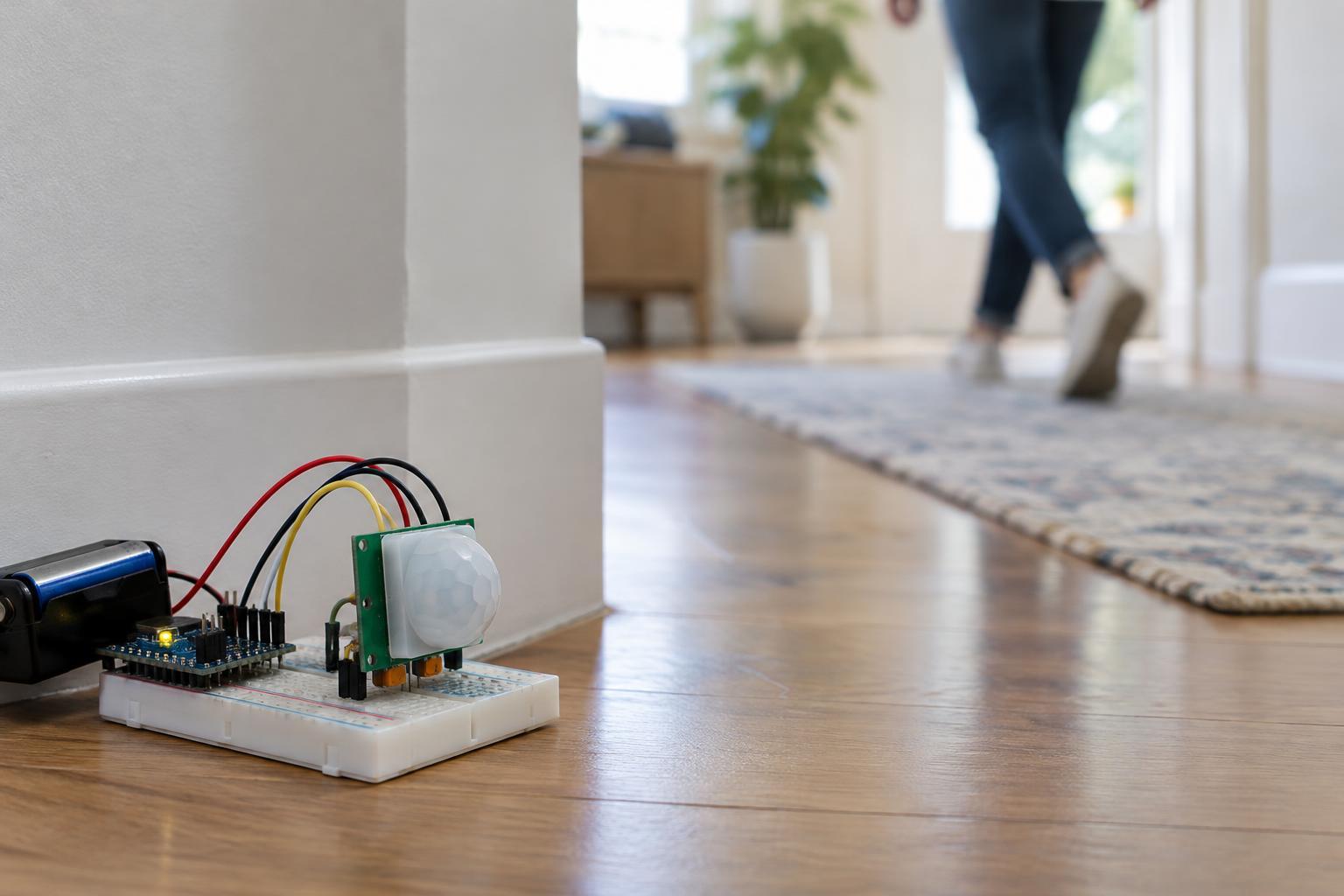
Many PIR modules have a patterned plastic lens over the sensing element. The lens divides the view into detection zones. As a warm object crosses between zones, the amount of infrared radiation reaching the sensor changes. This is why walking across the sensor’s view often produces a clearer response than moving straight toward it. Detection depends on the surroundings as well as the moving object; there is no single range that applies to every room and placement.
Choose a position for the movement you expect
Begin by deciding where a person or animal is likely to travel. For a doorway experiment, aim the sensor so someone entering crosses its field of view rather than walking directly toward it. For a desk-area indicator, check whether ordinary seated movements are enough to trigger the module before deciding that the position is suitable. A PIR sensor is a poor choice if the project must confirm that someone remains present while sitting still.
Keep the lens clear of shelves, enclosures and other obstructions. A sensor pointed at a hallway may respond to movement outside the area you intended to monitor; a sensor tucked behind an obstacle may miss movement nearby. Ordinary window glass can also interfere with detection because it does not transmit the relevant infrared radiation in the same way as open air. Test the installed position rather than assuming a clear-looking line of sight will work.
Temperature changes near the sensor can complicate testing. Moving warm air, direct sunlight heating surfaces, or a nearby heater may contribute to unexpected responses in some setups. If a module triggers when nobody is crossing its view, try moving it away from these conditions and observe whether the behavior changes.
Understand the module’s output and timing
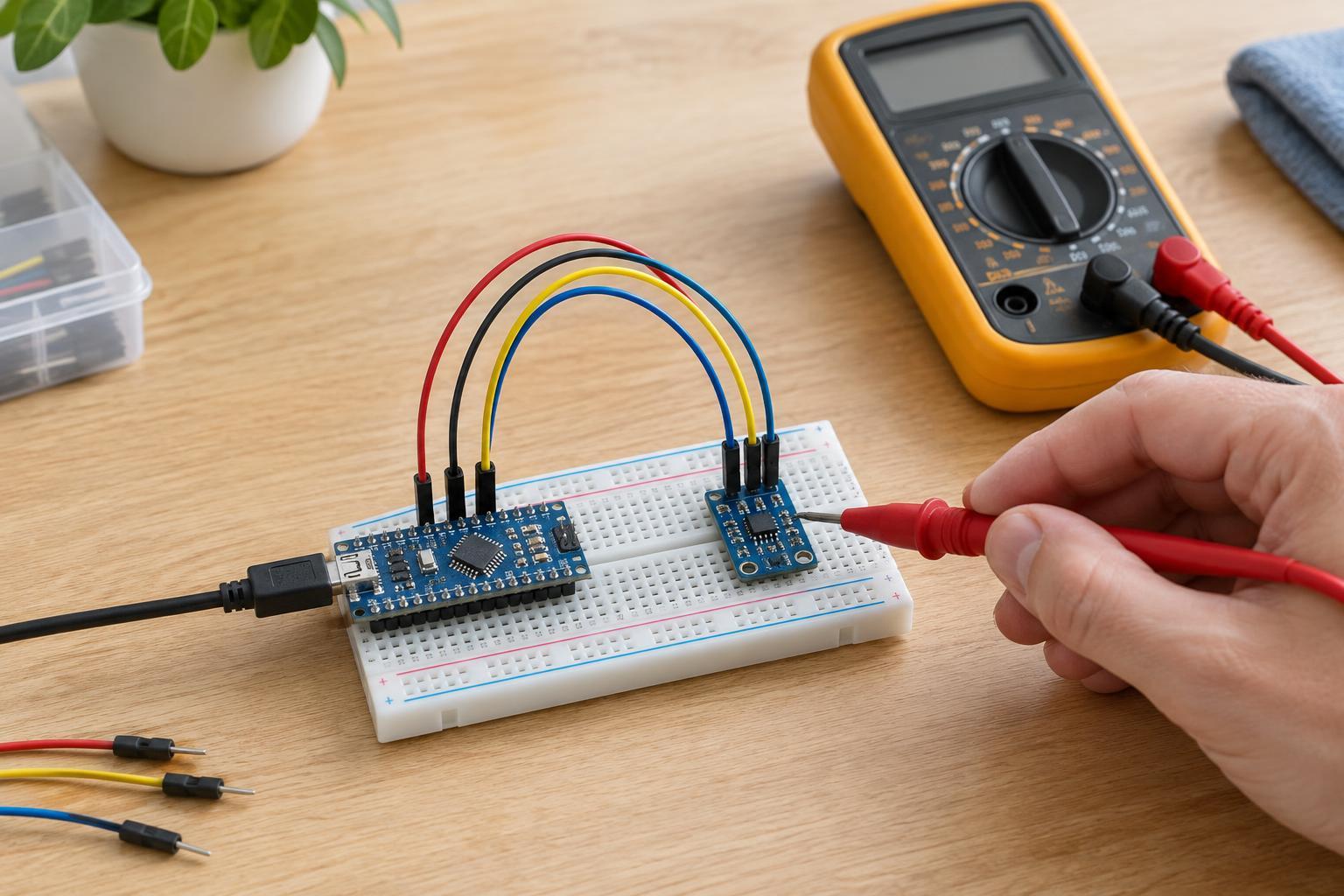
A typical maker-oriented PIR module provides a digital output that changes state when it reports motion. Check that particular module’s documentation or markings for its permitted supply voltage, output voltage, pin order and current requirements before connecting it to a microcontroller. Similar-looking boards can have different electrical limits. Connect grounds as required by the chosen low-voltage circuit, and do not assume an output is safe for a controller input merely because the connector fits.
Many modules need a settling period after power-up. During that time, the output may not reflect motion consistently. Some have adjustments for sensitivity or the length of time the output remains active; others have fixed behavior. A held-active output does not necessarily mean movement continued throughout that interval. If a project needs to distinguish separate passes, learn the module’s reset and hold-time behavior before writing code that counts each output change as a new event.
Test with a repeatable walking pattern
For a first test, use a suitable low-voltage power source and observe the output with a compatible microcontroller input or indicator circuit. Allow the module to settle, then walk across its view at several points: close, farther away and near the edges. Pause between passes so the output has time to reset. Record where a pass is detected and where it is missed. This simple map is more useful for placement than treating a stated detection range as a guarantee.
If the sensor seems unresponsive, confirm the pin connections and supply limits first. Then check that the module has settled, that its output is being read with the correct logic level, and that your test movement crosses the detection zones. If it triggers too broadly, change its aim or position before relying on a sensitivity adjustment. Make one change at a time so you can tell what helped.
Use motion detection within its limits
PIR modules work well for experiments such as a battery-powered activity indicator or a low-voltage light demonstration. They are less suitable when a project must distinguish a person from a pet, verify an empty room, or detect someone who remains still. Treat the output as a clue that something changed in the sensor’s view, not proof of who or what was there.
Keep beginner projects within isolated, low-voltage circuitry. Do not connect a PIR module or breadboard circuit directly to household wiring. If a project would control a mains-powered device, use an appropriately designed product or seek qualified help rather than improvising a mains connection. Careful placement, electrical compatibility checks and repeatable tests make the sensor much easier to understand without asking it to do more than it can.