Choose the right device before you open it
An old AA-powered remote, toy or simple alarm can offer useful parts for a low-voltage project. Through-hole components are especially approachable because their leads pass through the circuit board and are usually visible on the other side. Common finds include switches, battery contacts, connectors, resistors, indicator LEDs and small speakers. Salvage is most worthwhile when you have a likely use for the part; buying a known, inexpensive component may be easier when its exact specification matters.
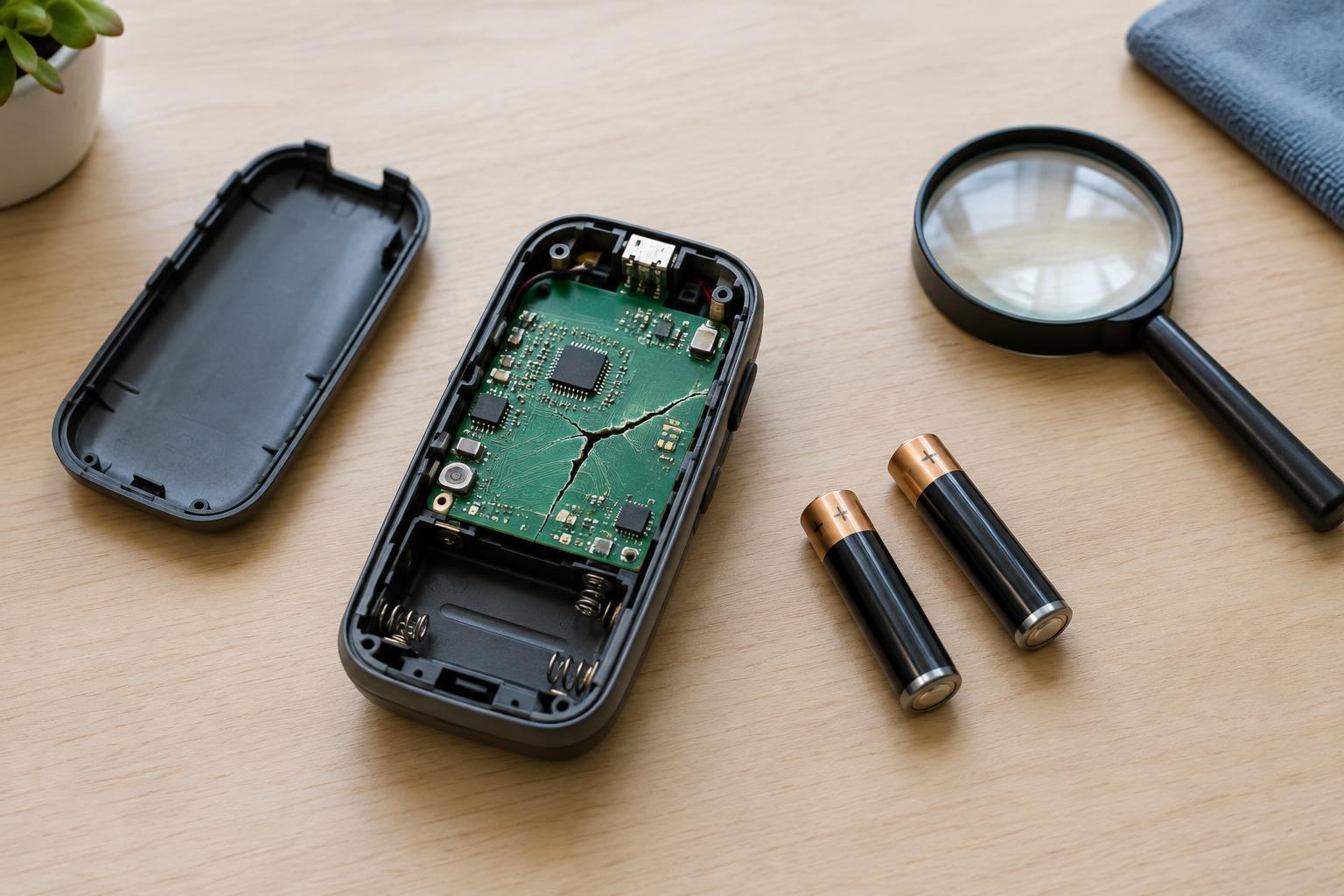
Start with a device whose power source and purpose you understand. Remove its AA cells before working, and set them aside so they cannot roll against metal tools. Do not work on a board while it is powered. AA batteries do not guarantee that every internal circuit is low voltage: a camera flash, electric shock toy or other device with a voltage-boosting circuit may contain a capacitor that retains a dangerous charge. Skip devices with those features, with an unfamiliar power arrangement, or with connections to a wall outlet. Do not attempt to discharge an unknown capacitor by shorting it.
Inspect the board and set up a safe workspace
Check for leaking batteries, corrosion, burnt areas and cracked parts before deciding what to keep. Battery leakage can damage components and leave irritating residue; avoid touching it with bare hands. If the board is badly corroded or contaminated, recycling it may be a better choice than salvage. Take a photo before removing anything. It can help you identify a part’s orientation, its original location and any markings that become hard to read later.
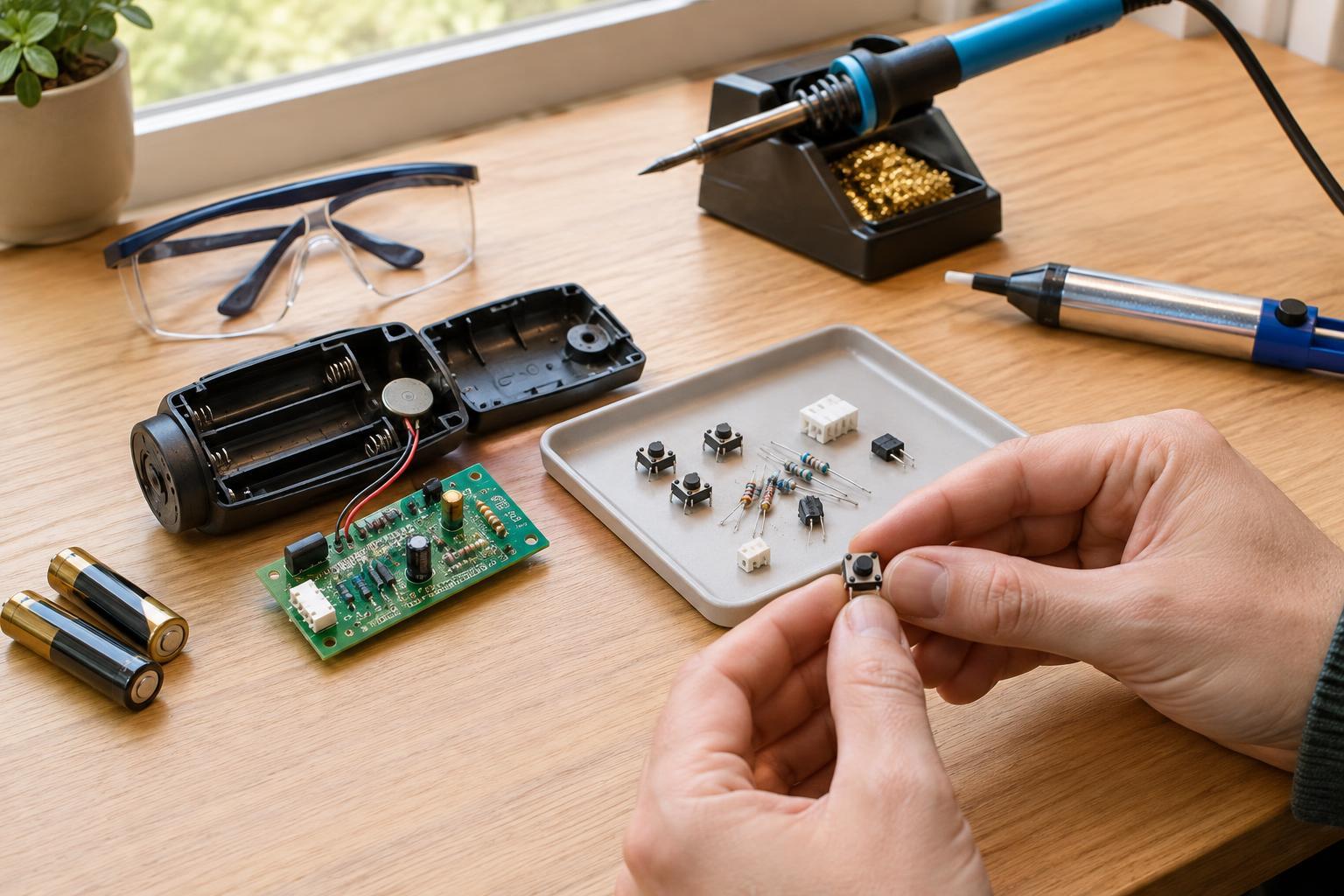
For soldering, use a stable surface, eye protection, a soldering-iron stand and ventilation that carries fumes away from your breathing area. Keep drinks and food away, wash your hands after handling old boards or solder, and treat the solder as potentially lead-containing unless you know otherwise. A beginner should limit this work to accessible, unpowered boards and components that release with modest heat and force. If you cannot identify the board or work comfortably with a hot iron, stop rather than pry parts free.
Remove parts without overheating them
First identify the component on both sides of the board and count its soldered leads. A small switch may have support tabs as well as electrical pins, while a connector can have several closely spaced joints. Secure the board so it will not move. Heat one joint with the iron, then remove molten solder with a pump or suitable desoldering wick. Let the joint cool before trying again if the solder does not clear readily. Never pull on a component while its leads are still anchored; torn pads can make removal harder and may damage the part.
For a two-lead component, clear each hole and lift the part only when both leads move freely. Larger switches and connectors often take more patience. Repeated heating can loosen plastic, damage LEDs or switches, and lift copper pads, so it is reasonable to abandon a stubborn part. Keep the iron in its stand when it is not in your hand, and allow removed parts and the board to cool before handling them.
Check and label what you recovered
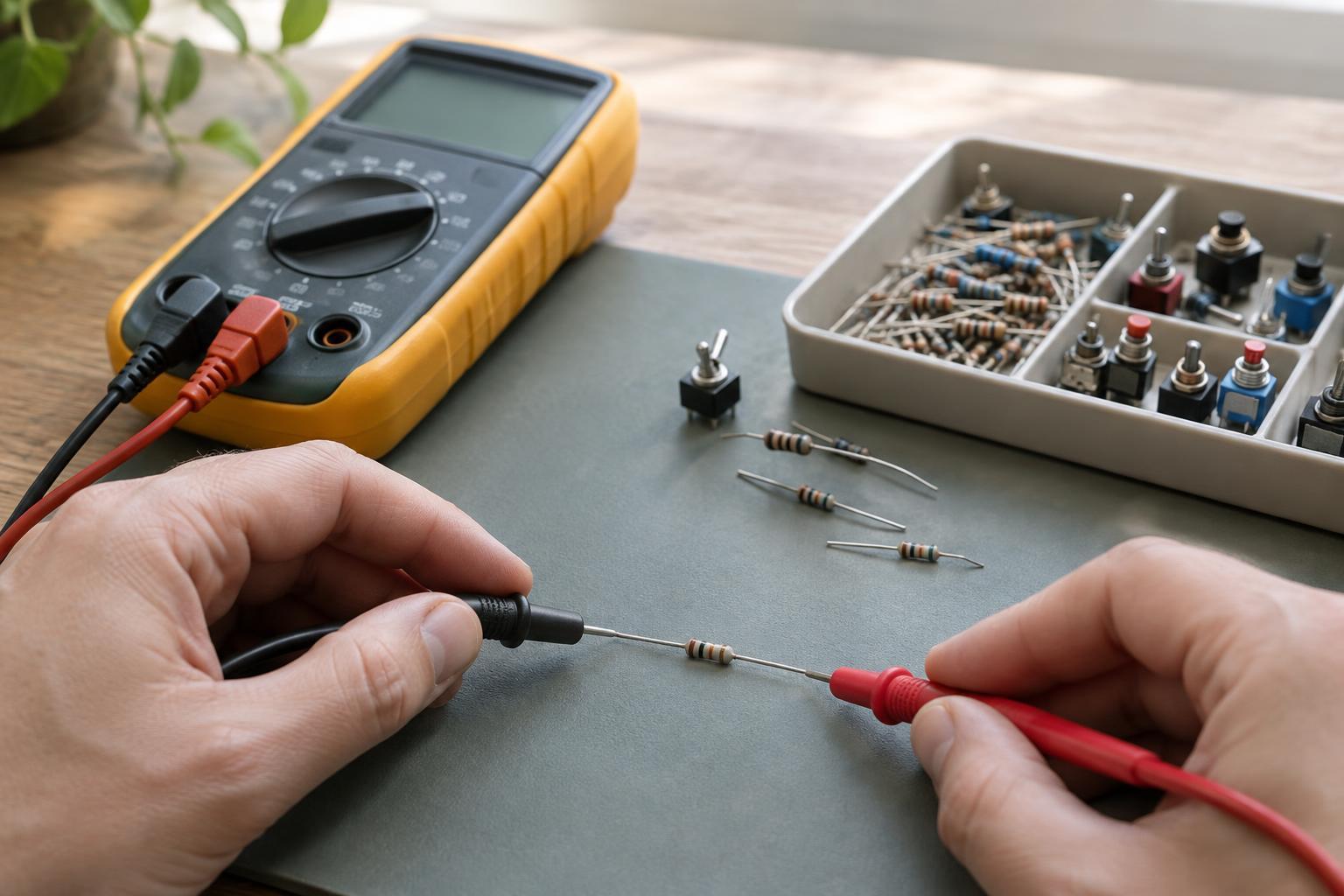
A salvaged part should be treated as unverified until you inspect and test it. Look for bent or broken leads, melted housings, corrosion and unreadable markings. A multimeter can help confirm a resistor’s approximate value or check whether a switch opens and closes. Its diode-test function may help identify an LED’s polarity, though results depend on the meter and LED. These simple checks do not establish every rating or reveal every fault.
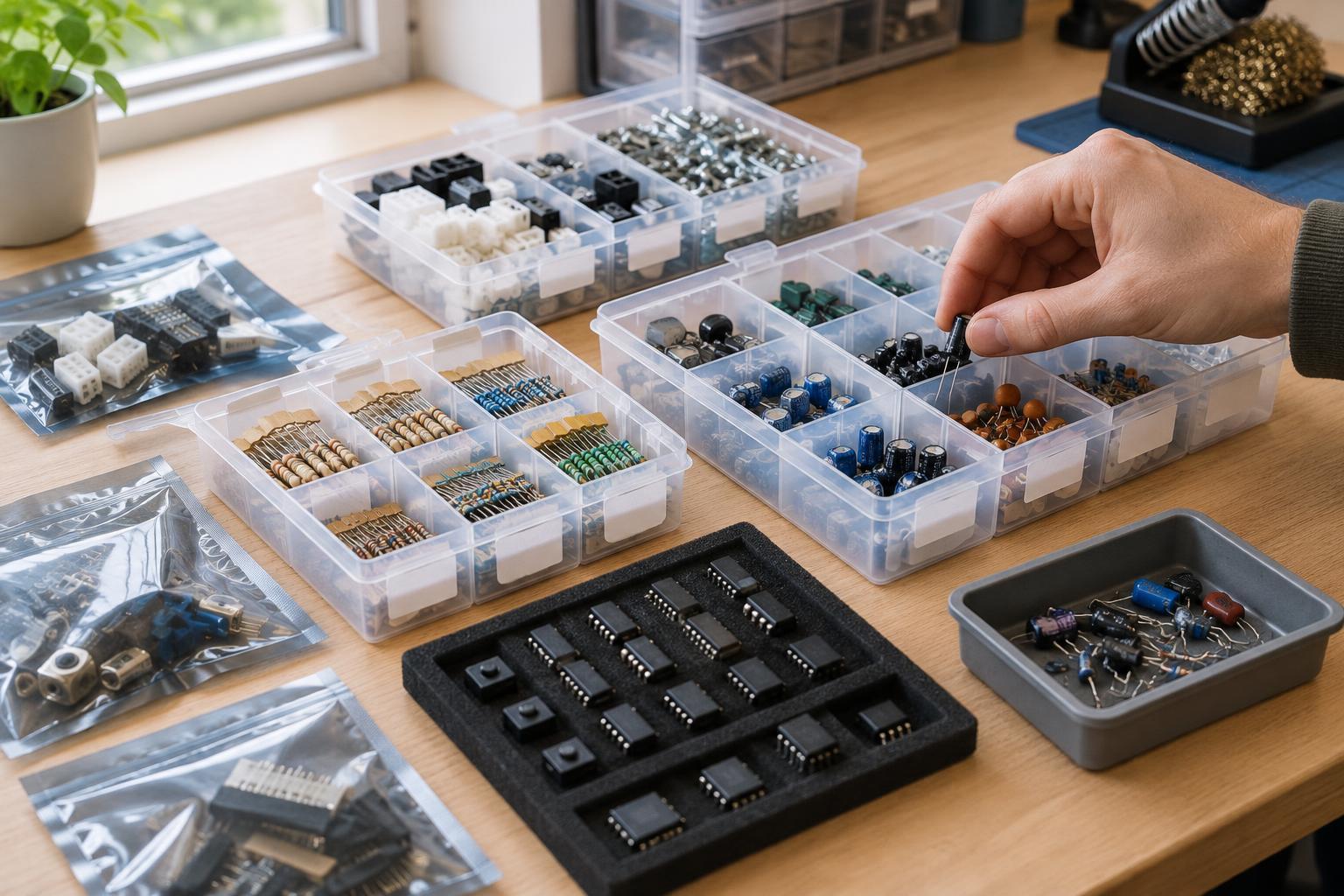
Keep parts in small labeled containers or bags. Record the device they came from, any printed part number, and what you measured. Preserve orientation notes for polarized components, including LEDs and electrolytic capacitors. Do not assume a salvaged capacitor is suitable for a new circuit merely because it looks intact; its value, voltage rating and condition all matter. For a beginner project, clearly identified switches, battery contacts and connectors are often more useful than mystery components.
Make reuse worthwhile—and dispose of the rest
Plan to use recovered parts in simple, battery-powered circuits that remain within your skills and the parts’ known ratings. A switch from a small toy, for example, might suit a modest low-voltage experiment, but its appearance alone does not establish how much current it can handle. When reliability or safety depends on a specification you cannot confirm, choose a part with documented ratings instead.
Sort remaining materials rather than putting everything in a parts drawer. Store usable components safely, keep spent batteries separate from loose metal objects, and follow local collection guidance for batteries, circuit boards and electronic waste. Salvaging a few well-understood parts—and recycling an unsuitable board—is a successful outcome too.