Choose a suitable empty enclosure
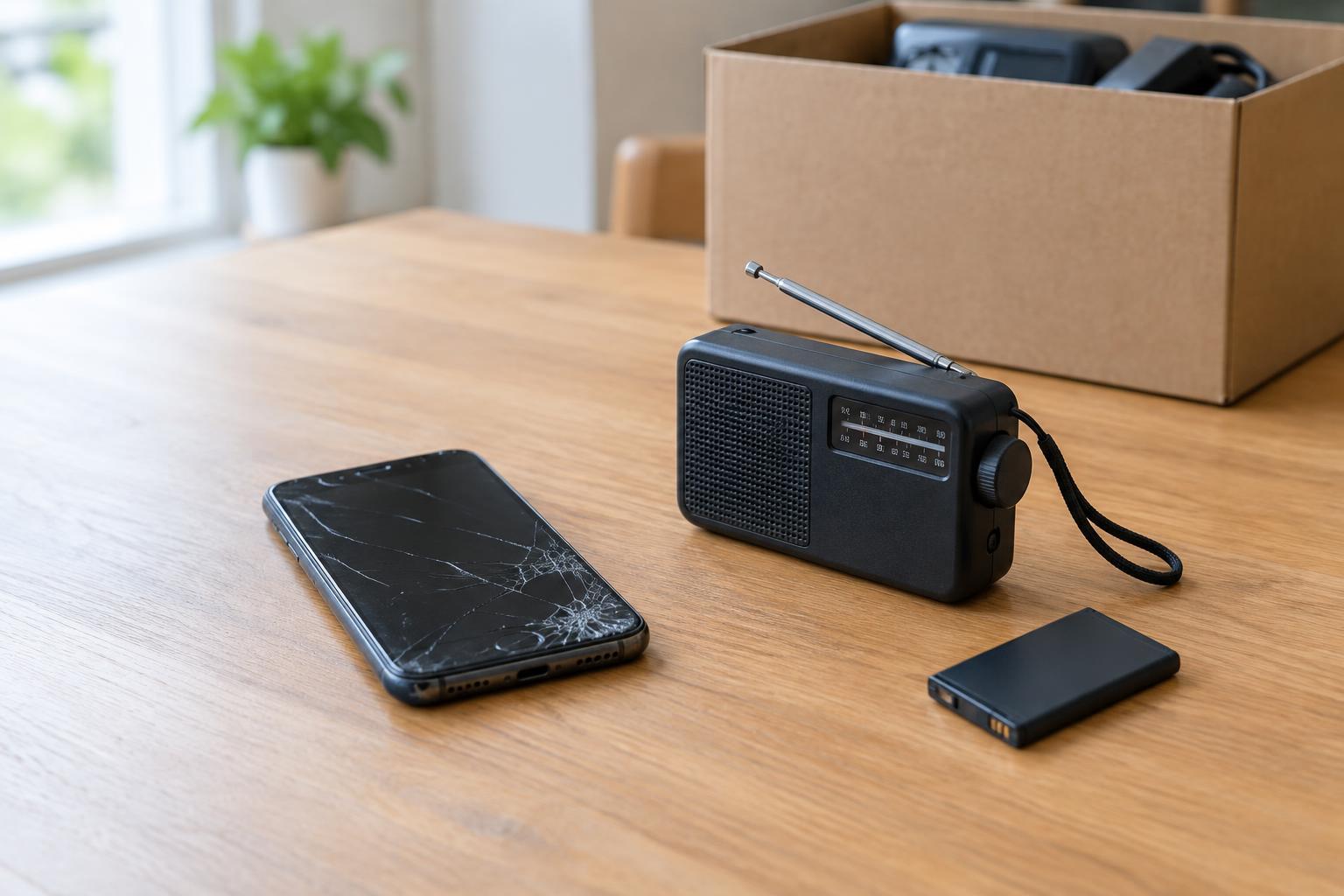
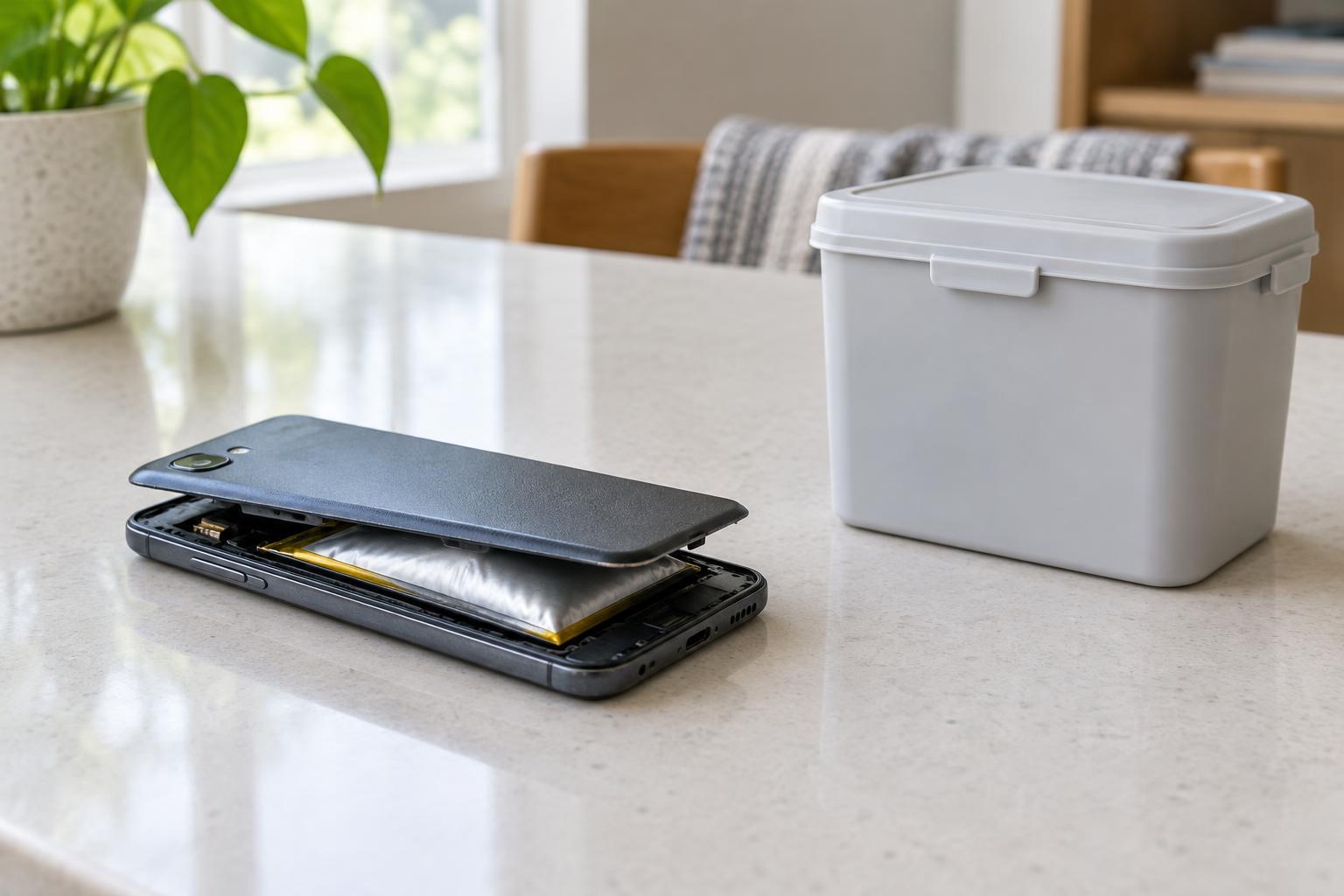
A case from an old electronic device can save materials and give a new project a finished appearance. Start with an enclosure that is genuinely empty and easy to inspect. For a beginner project, keep all power inside the case at low-voltage DC, such as from a battery holder or a suitable external DC supply. Do not repurpose an enclosure that still contains mains wiring, a built-in power supply, a damaged battery pack or unidentified circuitry. An external power adapter should remain intact; its housing is not a project enclosure.
Look closely at the case before planning around it. Cracked plastic, broken screw posts, corrosion, sticky residue and warped seams can make it hard to secure parts or close the lid. Check that buttons, vents and removable panels still fit. If you cannot clean and inspect the interior without disturbing potentially hazardous parts, choose another case.
Plan the fit before making holes
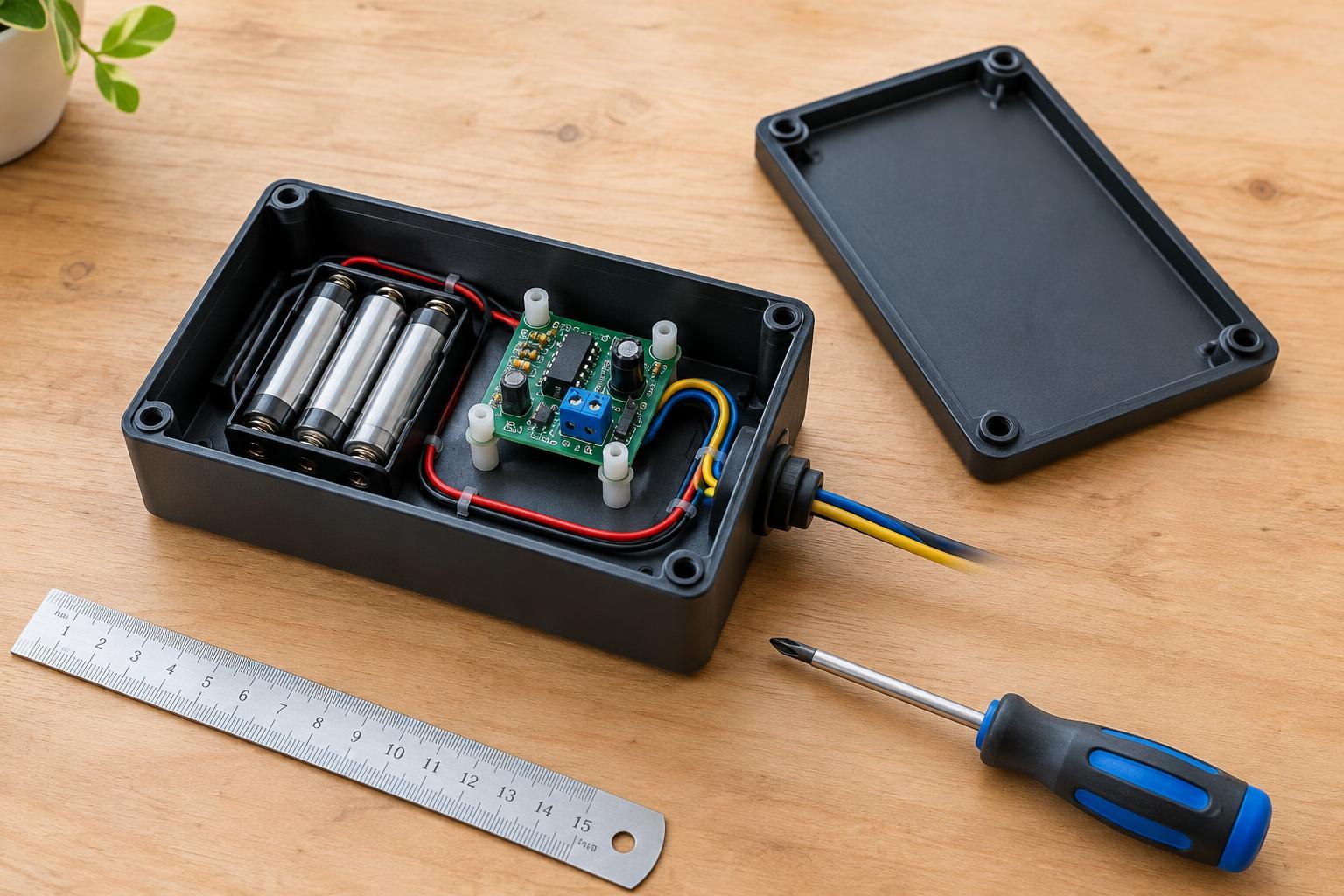
Lay the components inside the open case without connecting power. Include the circuit board, battery holder if used, connectors, switches and the wires that will join them. A board may fit flat while its plugs, solder joints or wire bends do not. Leave room to insert and remove batteries, operate controls and reach screws without pulling on wiring. Confirm that the lid closes without pressing on components.
Identify how each part will be held in place. Existing mounting posts may be useful if their positions match the board; otherwise, suitable standoffs or brackets can keep a board from sliding. Avoid relying on loose foam or a tangle of wires to restrain it. Mark any proposed holes with the case empty, and check both sides before drilling. A misplaced hole can weaken a screw post or leave too little material around a connector.
Plan cable openings as carefully as the components. A cable should not be pinched by the lid or rub on a sharp edge. Use a suitable grommet or cable entry fitting where needed, and provide strain relief so a tug on the cable does not pull directly on a solder joint or terminal. If the project needs more space than the case allows, use a larger enclosure rather than forcing the parts together.
Check what conductors could touch
Insulation is not just the coating on a wire. It also depends on how exposed contacts, solder joints and circuit boards are positioned. With the power disconnected, trace each wire and look for bare metal that could touch another conductor, a loose screw or the enclosure. Secure connections with appropriate insulated connectors or coverings. Keep loose hardware out of the case, and support the circuit board so its underside cannot scrape against nearby surfaces.
Plastic cases can still contain metal inserts, screws and connector shells. Metal cases need particular care because a shifted board or damaged wire could bring a conductor into contact with the housing. Use secure insulating mounts and maintain space around exposed connections. If you cannot confidently prevent contact when the case is handled or closed, do not use that layout. Tape alone is a poor substitute for sound mounting and properly protected connections.
Consider heat, access and the surroundings
An enclosure changes how a project sheds heat. Even a low-voltage circuit can warm up, especially near a regulator, motor driver or battery. Follow the component maker’s installation guidance, leave room around parts that may get warm and avoid blocking any ventilation the design requires. A case that worked for its original device is not automatically suitable for a different arrangement of parts.
Think about where the finished project will be used. An ordinary reused case should not be assumed to resist water, dust or rough handling. Keep it away from spills and damp locations unless the complete design is appropriate for those conditions. Make sure a switch and any battery compartment remain accessible without exposing the user to loose wiring.
Inspect the closed project before use
Before applying power, close the case and reopen it once to check for new pinch marks or displaced parts. Confirm that screws tighten without bending the board, cables stay put when gently moved, and no wire crosses a closing seam. Check the supply polarity and voltage against the project’s requirements. If you have the skills and a meter, an unpowered continuity check can help reveal an unintended connection; it does not replace a careful visual inspection.
For the first powered test, keep the project attended and stop if you notice unusual heat, smell, noise or erratic behavior. Disconnect power before adjusting anything inside. Reuse is worthwhile when the case protects the circuit and allows it to be maintained. If achieving that requires cramped wiring, uncertain insulation or a compromised enclosure, recycling the old case appropriately and choosing a better one is the safer choice.