What happens when the motor starts
A brushed DC motor does not draw a constant current. At the instant it starts, its rotor is stationary and it has not yet developed the opposing voltage produced as it spins. Current can therefore be much higher than it is during normal running. A motor that is held still, or stalled, can also continue to draw high current. The exact amount depends on the motor, load, supply voltage and resistance in the circuit.
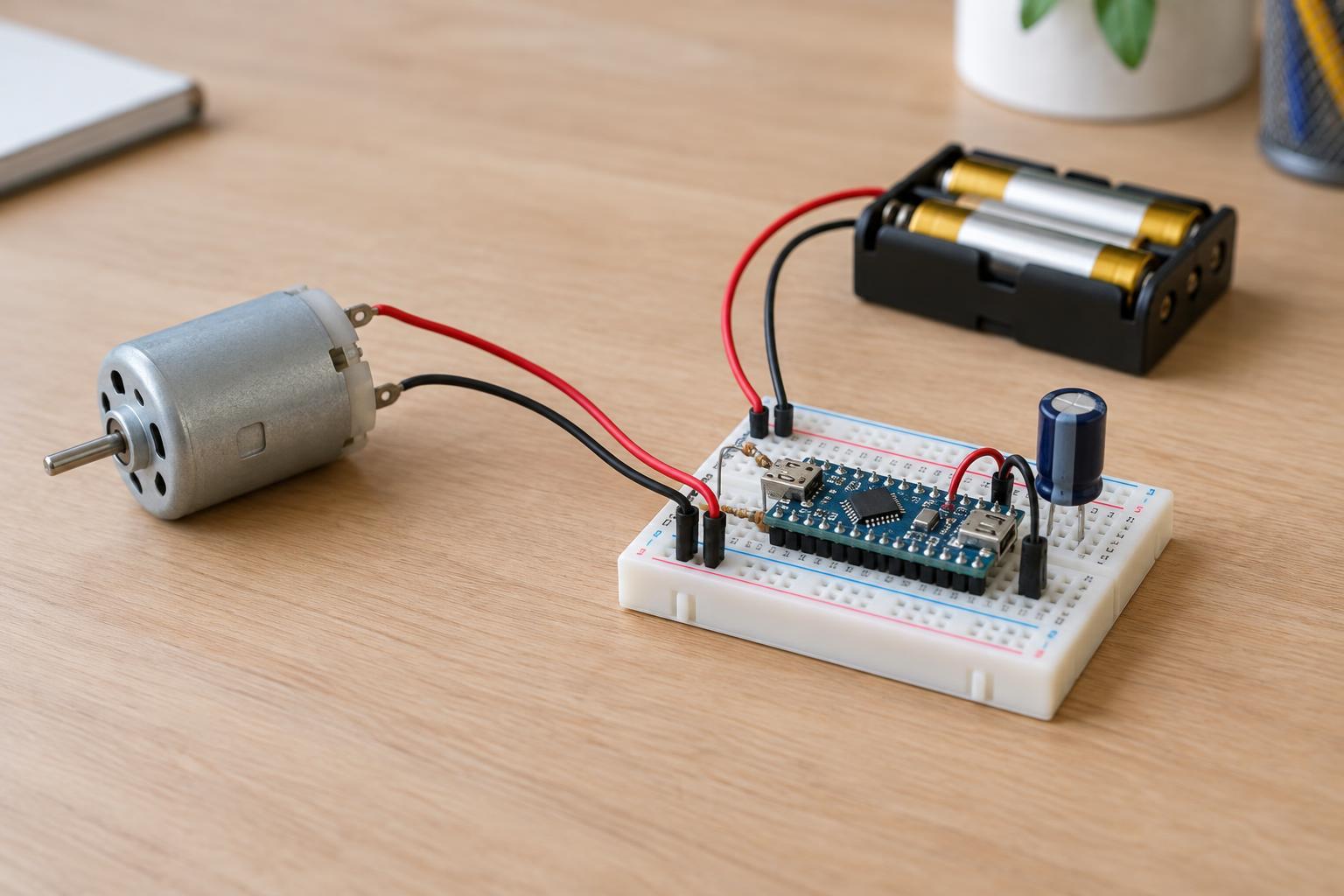
If the motor and microcontroller share a power source, that brief demand can lower the voltage reaching the controller. A regulator may also struggle if its input voltage falls too far or its current limit is reached. Many microcontrollers reset when their supply drops below a threshold. The result may look like a software fault: the motor starts, the display goes blank, and the program begins again.
Where the voltage goes
Every battery, connector, switch, wire and circuit-board trace has some resistance. When motor current rises, the voltage lost across those parts rises too. A long, thin lead or loose connector can make a supply dip worse even when the power source appears adequate. If motor current flows through a ground connection shared with the microcontroller, it can also shift the controller’s local ground voltage.
A motor creates electrical noise as its brushes switch current, and switching it on or off can produce voltage spikes. These effects can disturb nearby signals as well as power rails. Still, when a controller consistently restarts at motor startup, checking its supply voltage is a useful first step. Avoid assuming that a larger capacitor alone will solve every reset; the main limitation may be the source, regulator or wiring.
How to check the cause safely
Work only with a low-voltage supply and components you know how to use. Disconnect power before changing wiring, and check the motor driver’s ratings and connections before switching it on. Do not connect a motor directly to a microcontroller output pin: the pin is generally intended for much less current than a motor needs. Use a driver suited to the motor and supply.
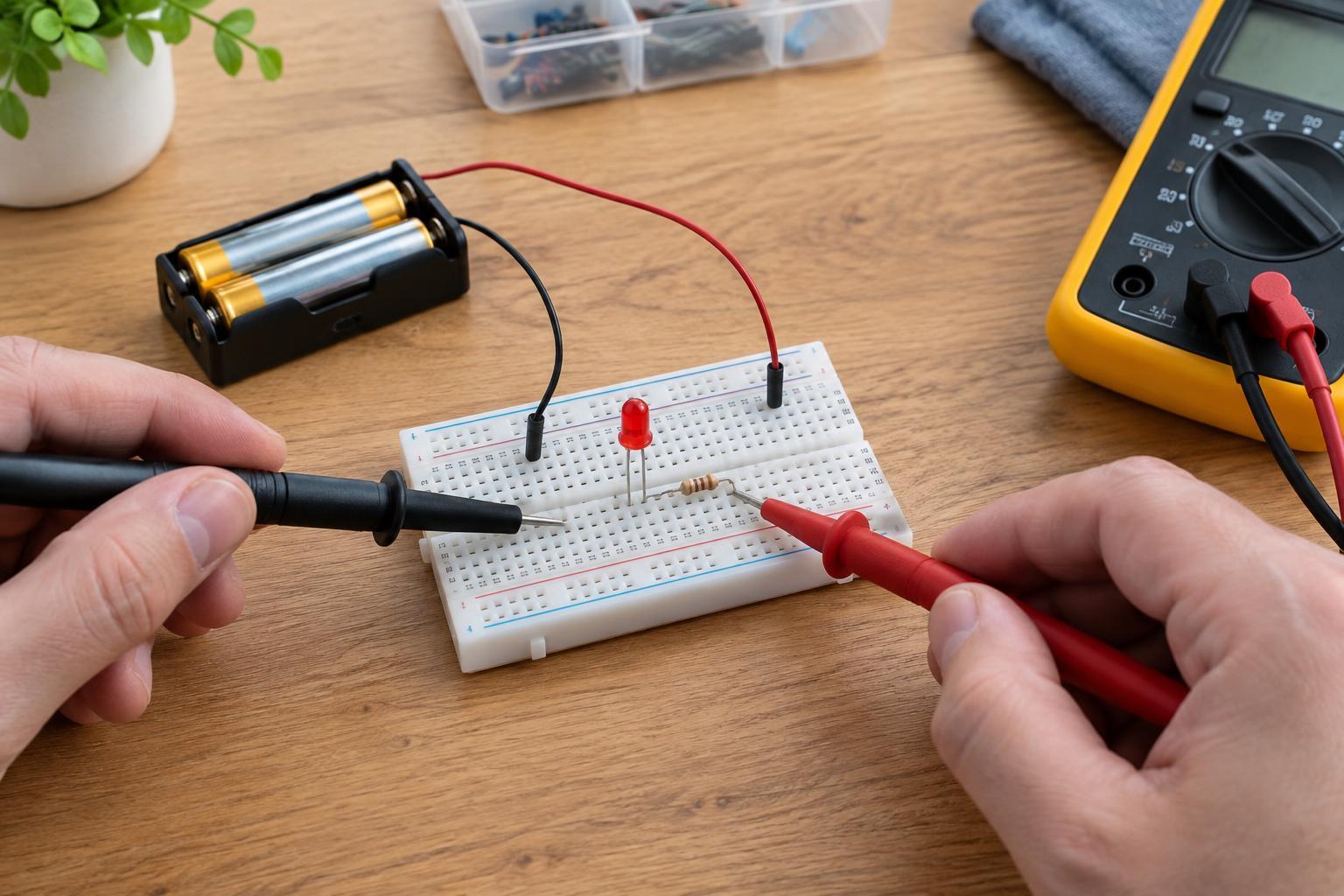
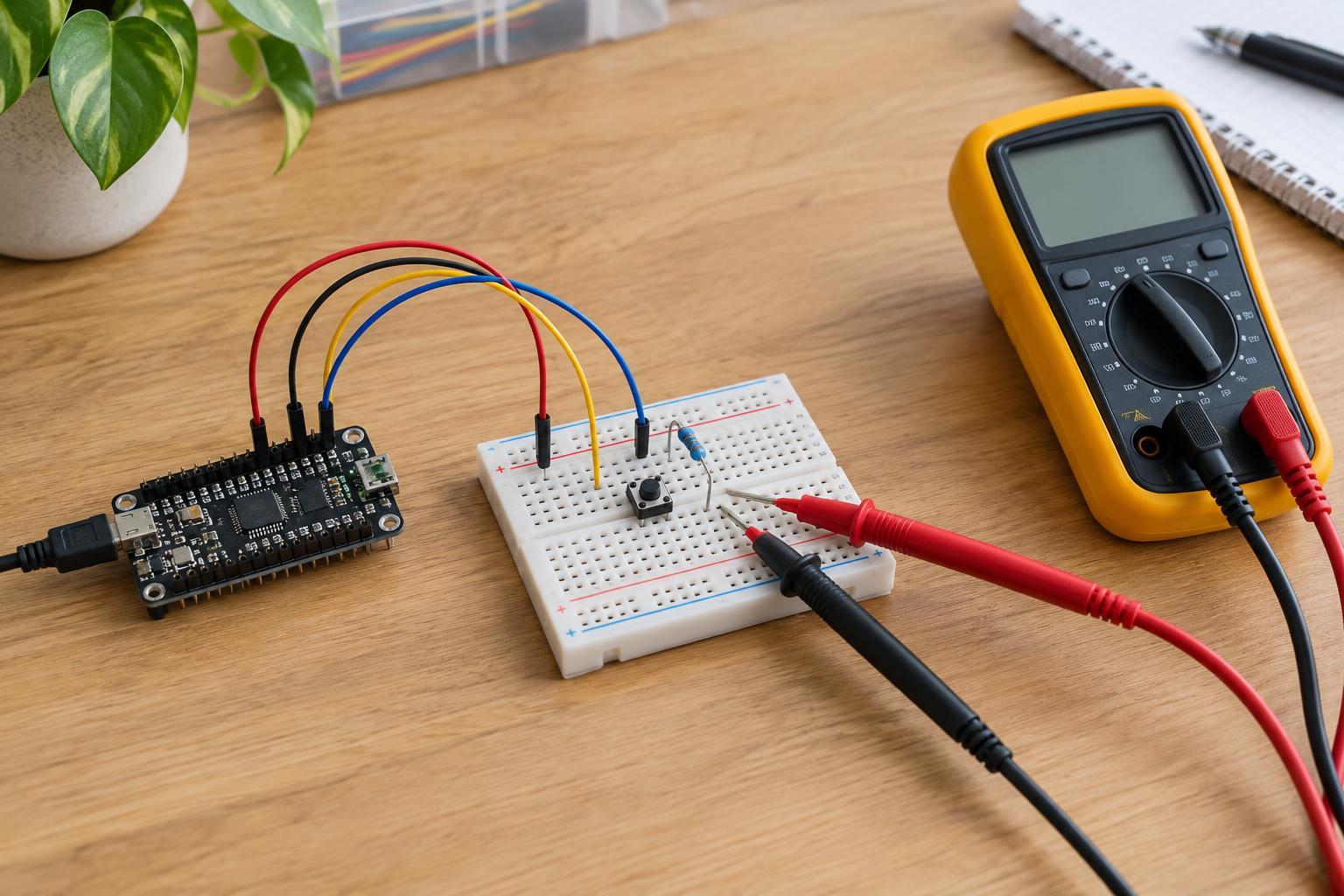
First, note whether resets happen only as the motor starts, changes direction or meets a heavier load. Then measure the voltage at the microcontroller’s power and ground pins while the motor starts, rather than measuring only at the battery. A multimeter may miss a very short dip; an oscilloscope, if available and used correctly, can show it more clearly. Compare that reading with the voltage your controller and regulator require. If the supply stays steady but resets continue, investigate noise on reset or signal wiring and check the program’s behavior as well.
Build a sturdier power path
Choose a supply and motor driver that can handle startup or stall current, not just the motor’s running current. Check the motor’s specifications where available, and leave room for the load it will actually drive. Keep the motor’s high-current path separate from the controller’s path as far as practical, joining their grounds at an appropriate common point so control signals still have a reference. Short, sound connections help reduce voltage loss.
Place the microcontroller’s recommended bypass capacitors close to its power pins. A larger capacitor near the motor driver or on the relevant supply rail can sometimes help with brief dips, but it cannot make an undersized supply deliver sustained current. Use the driver’s recommended protection against motor switching transients; the right arrangement depends on whether the motor runs in one direction or uses an H-bridge for reversal. Follow the driver’s documentation rather than adding a diode across the motor without checking the circuit.
Test one change at a time
After each wiring or component change, repeat the same startup test and measure the voltage at the controller again. Try the motor under its expected mechanical load, since a freely spinning motor may hide a problem that appears when the mechanism is attached. Also check whether wires, connectors, batteries or driver components become unexpectedly warm; switch off and investigate if they do.
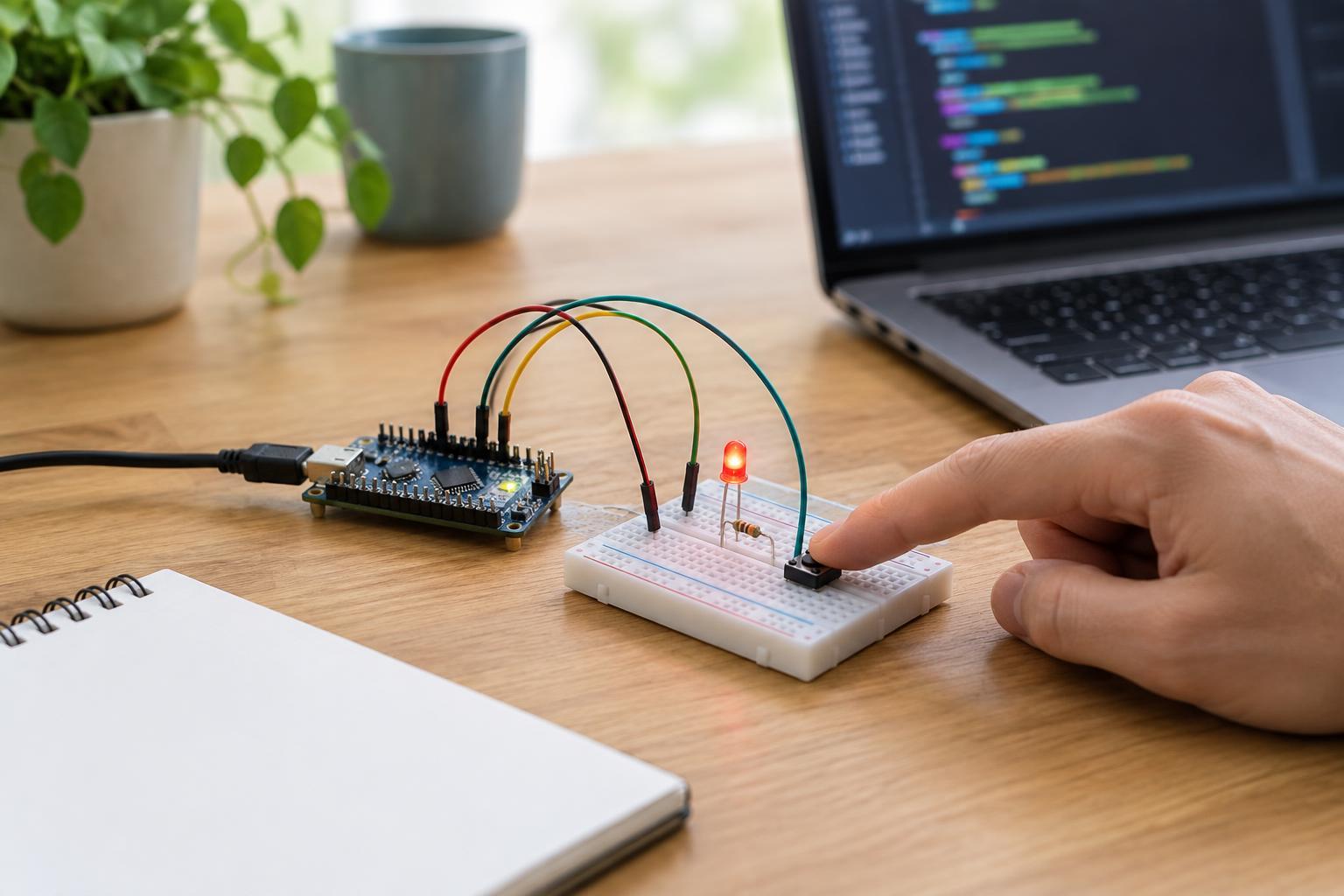
The central troubleshooting question is simple: does the controller still receive a suitable supply voltage when the motor demands its highest current? Answering it at the controller’s pins helps separate a power-path problem from a software or signal problem. That approach applies to many low-voltage projects with motors, pumps and other loads that draw a surge when they start.