Set a safe boundary before testing
Salvaging parts can reduce waste and make low-voltage projects more affordable, but a part that looks intact is not necessarily usable. A multimeter helps screen resistors and switches for obvious faults. It cannot establish every specification or guarantee that a part will remain reliable in service. Treat salvaged parts as candidates to check, not as known-good replacements.
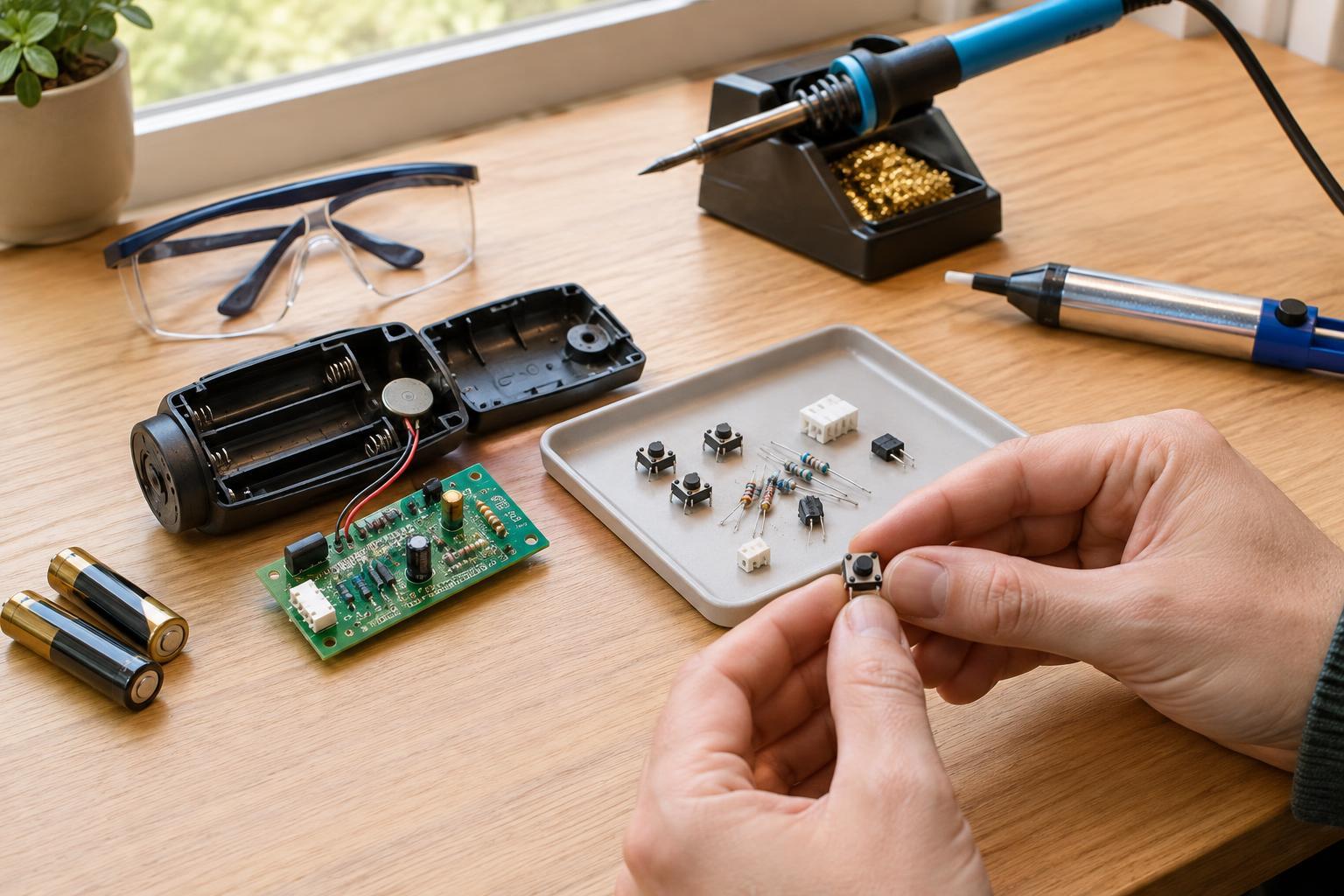
These checks are for loose parts from low-voltage equipment, or parts removed from a circuit that has been disconnected from power. Do not use the resistance or continuity setting on a powered circuit. Avoid opening mains-powered equipment, power supplies, and devices with large capacitors unless you have the training and equipment to handle their hazards; unplugging alone does not make every internal part safe. If a part’s origin or electrical rating is uncertain, do not put it in a safety-critical role.
Inspect, identify, and prepare the parts
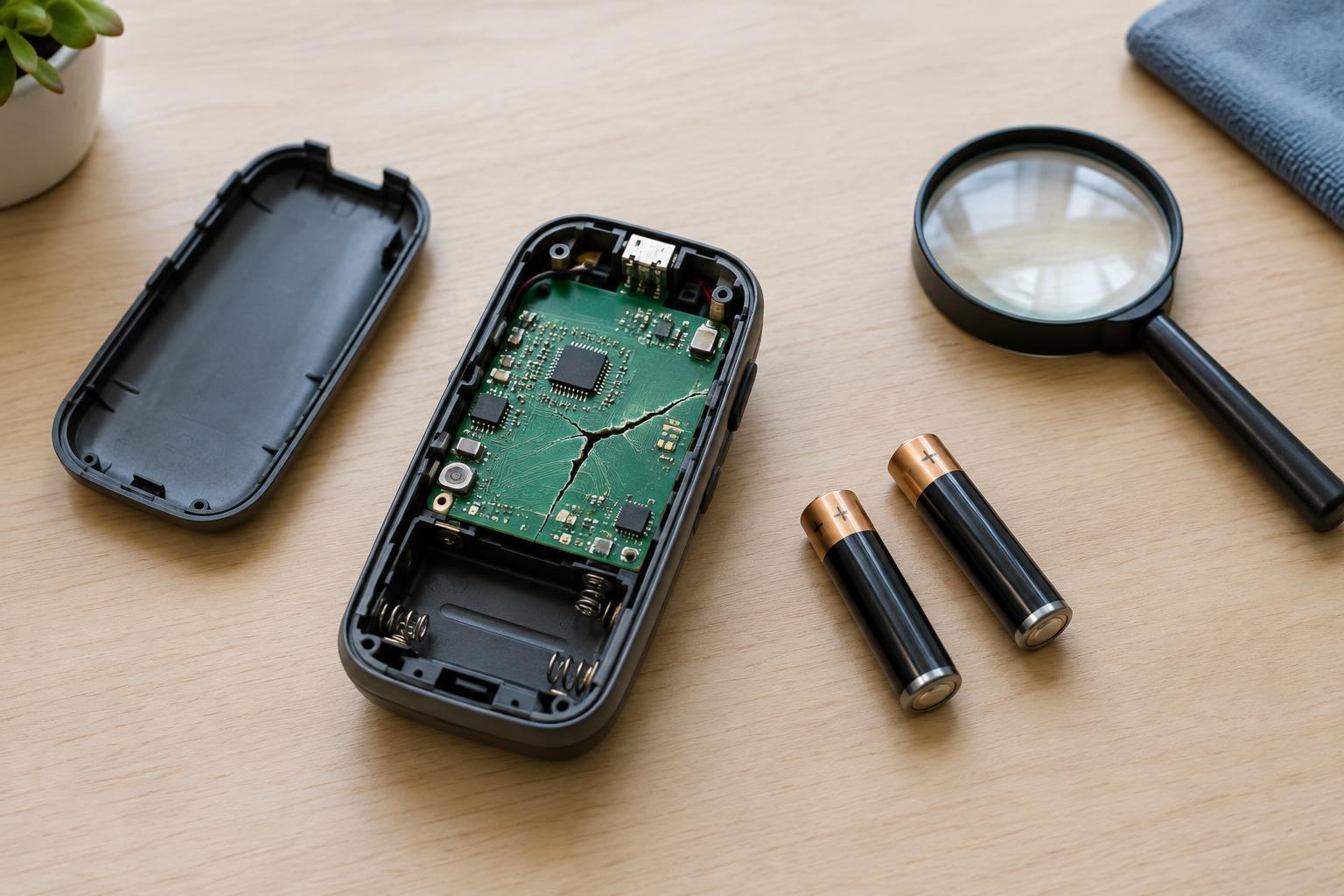
Start with a visual inspection. Set aside resistors with cracked bodies, scorching, damaged leads, or markings you cannot interpret. On switches, look for broken housings, loose terminals, corrosion, sticky movement, or signs of overheating. Dirt on an external contact may be manageable, but damage hidden inside a sealed switch is harder to judge. Keep rejected parts separate so they do not drift back into your usable stock.
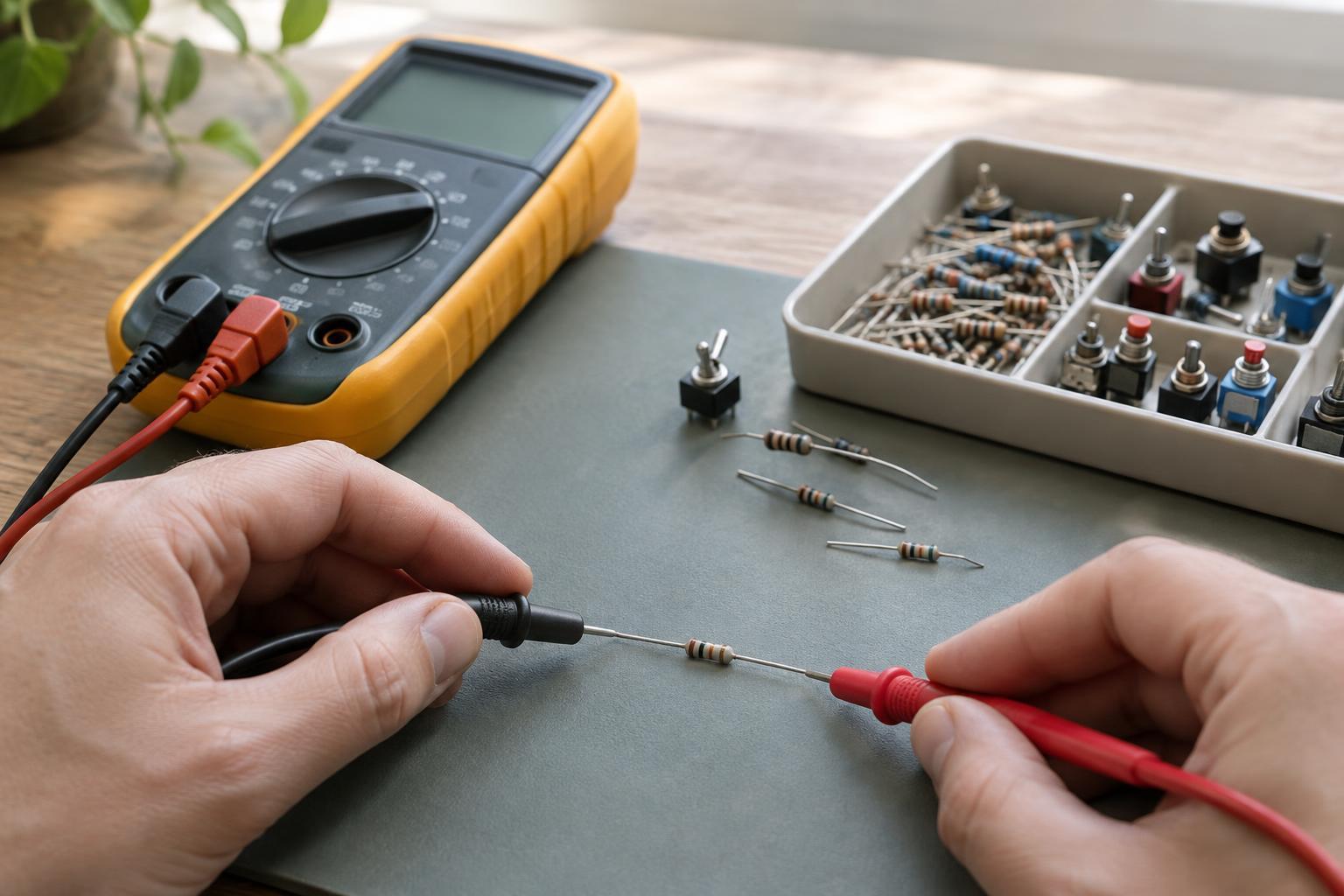
Record what you can identify before measuring. A resistor’s bands or printed code indicate its nominal resistance and, where marked, its tolerance. A switch may be labeled with a terminal diagram or a voltage and current rating. If those details are missing, a successful meter test does not recover them. Keep the meter leads in the correct sockets, select the resistance or continuity function, and touch the probes together first. This confirms that the leads work and shows the small resistance of the leads themselves.
Measure salvaged resistors
Measure each resistor by touching one probe to each lead. Hold the probes against clean metal rather than gripping both leads with your fingers; contact through your body can affect readings, particularly at high resistance. If the meter is not autoranging, choose a range above the expected value. Give the display a moment to settle, then compare it with the marked value and tolerance. For example, a resistor marked 1,000 ohms with a 5% tolerance would normally be expected to read between 950 and 1,050 ohms.
An overload or open-circuit indication on a suitable range may mean the resistor is broken, but first check probe contact and the selected range. A reading far below the marked value may indicate a damaged part or a misread code. If a resistor is still attached to a circuit, other components can create a parallel path and change the reading; lift one lead or remove the part for a meaningful check. A meter reading also cannot confirm a resistor’s power rating. Do not substitute an unidentified part where heating or reliability matters.
Check switch action and terminals
For a simple two-terminal on/off switch, place a probe on each terminal and move the actuator through its positions. In the closed position, expect a low resistance or a continuity beep. In the open position, expect an open-circuit indication. Test several times while moving the actuator normally. Readings that jump around, require unusual pressure, or fail intermittently suggest worn or contaminated contacts.
A continuity beep is a quick indication, not a precise measure of contact quality. Switches may have several terminals and more than one contact arrangement. Test pairs systematically, noting which terminals connect in each position rather than assuming that adjacent terminals belong together. If a button is momentary, hold it while taking the relevant reading. A switch can pass a low-current meter test yet perform poorly under its intended load, so do not infer an unknown current rating from continuity alone.
Decide what to reuse
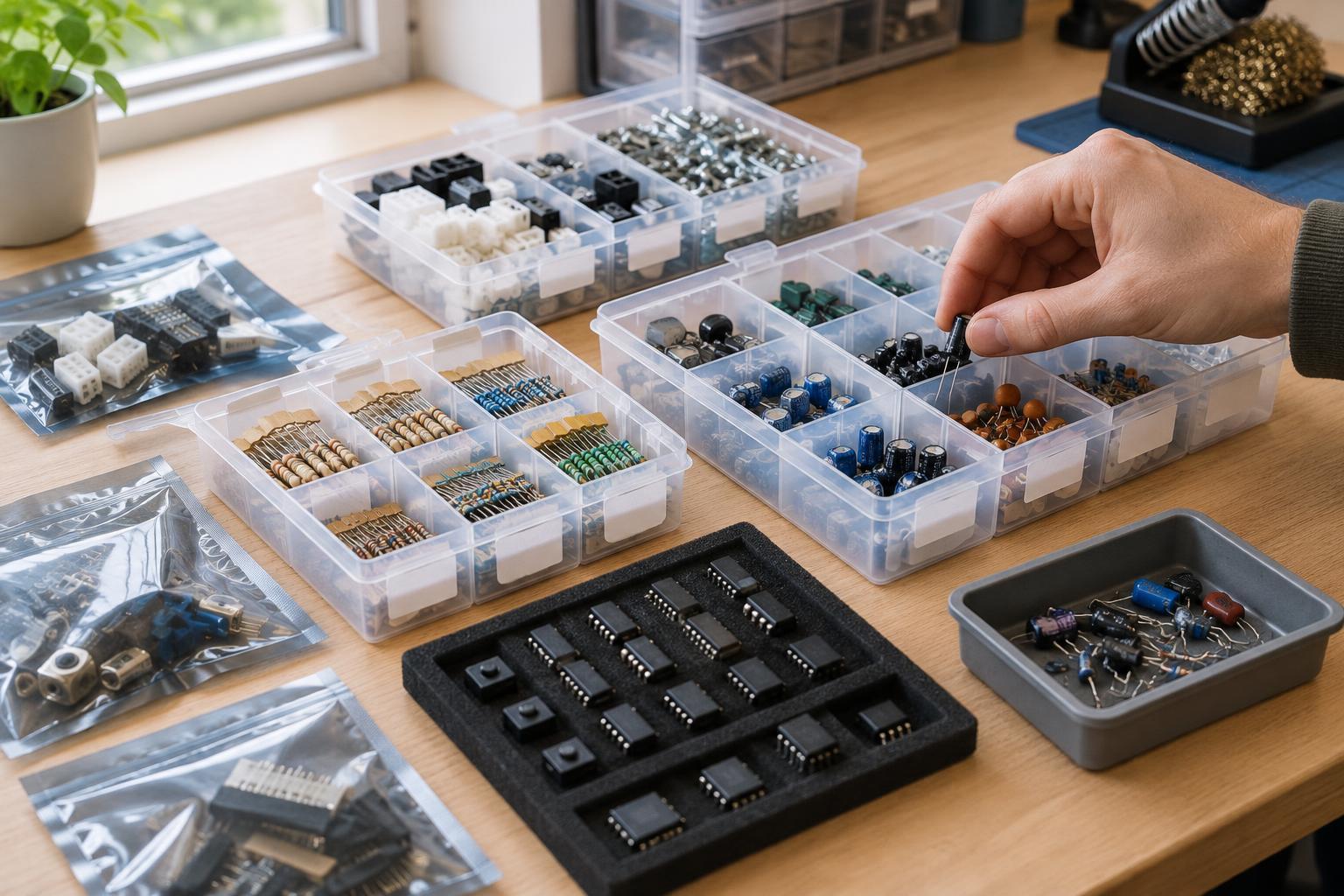
Label parts that pass with their measured values or observed switching pattern, and store them where their leads and terminals will not be bent or shorted together. Retest a part when you take it out of storage if its condition has changed or the project depends on dependable operation. Keep uncertain parts for experiments only if their limits are clear; otherwise, route them to an appropriate electronics-recycling stream.
For a low-voltage prototype, a resistor close to its marked value or a switch that operates consistently may be a reasonable candidate when its other required specifications are known. For a repair, match the original part’s relevant specifications, including resistance and power rating for a resistor or contact arrangement and electrical rating for a switch. When those details cannot be established, replacing the part with a correctly specified one is the more dependable choice.