Start with a safe sorting area
Salvaged parts can make low-voltage projects less wasteful, but a drawer full of loose components quickly becomes difficult to use. Before sorting, clear a dry, well-lit work surface and set out a few temporary containers. Work only with devices that are unplugged and within your skill level. Do not open mains-powered equipment, power supplies, microwave ovens, or other equipment that may retain hazardous energy unless you are qualified to assess it. A part is not worth recovering if the removal process is unsafe.
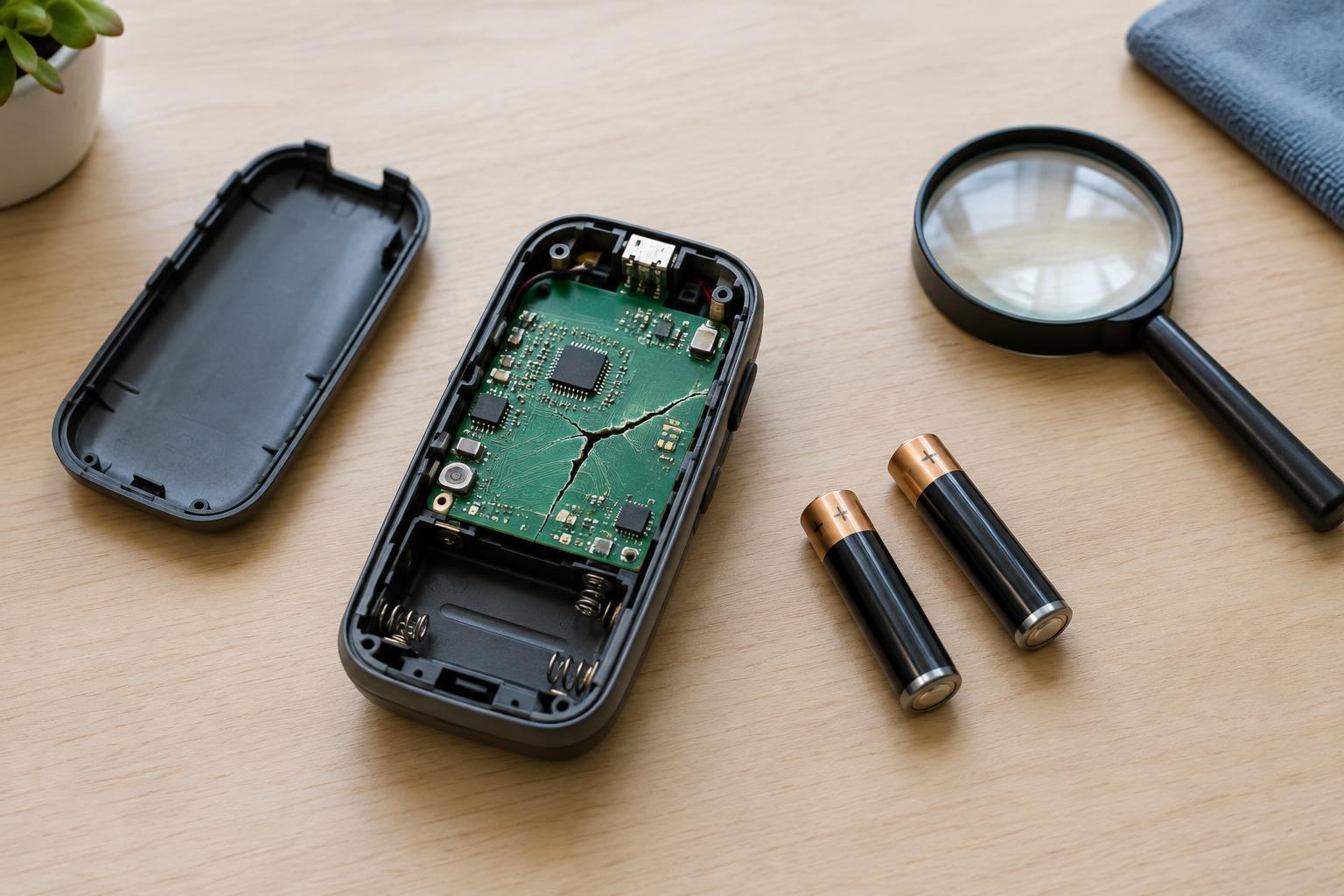
Keep batteries out of the general parts pile. Loose cells can short against metal items, while swollen, leaking, or damaged cells need careful handling and appropriate local disposal rather than storage for reuse. Set aside any part with a burnt smell, visible corrosion, cracked insulation, or unknown contamination. Sorting these items early prevents them from being mistaken for ready-to-use components later.
Label what you know, not what you guess
Give each bag, box, or compartment a label before filling it. Useful details include the part type, any legible markings, the device it came from, and the date you removed it. For connectors and cables, note which end is which and, if known, the original connection. A short note such as “three-pin connector, from small fan, pinout unverified” is more helpful than calling it a fan connector and assuming every similar-looking plug is wired the same way.
Separate confirmed information from assumptions. If a resistor value is unreadable or a sensor has no clear part number, label it “unidentified” until you can check it. A photograph taken before removal may help preserve orientation, wire colors, and board markings. If you have several identical-looking items, assign each one a simple identifier that matches its notes. That way, later test results stay attached to the right part.
Choose storage that protects the part
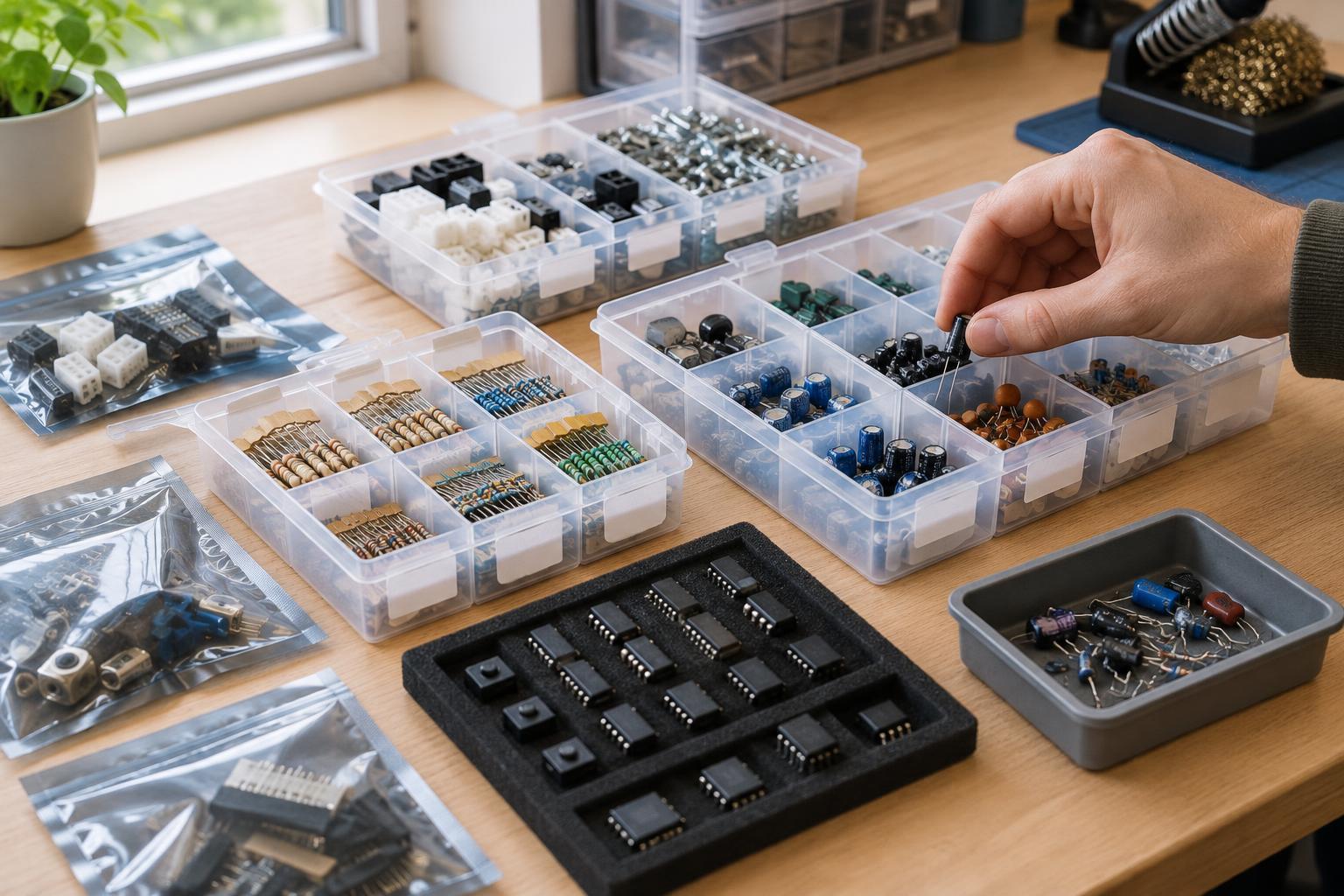
Small passive components such as resistors can go in labeled drawers or bags, provided their leads cannot tangle with other values. Keep screws and other hardware in a separate organizer so they do not scratch components or bridge exposed contacts. For parts with long leads, use enough space that the leads are not repeatedly bent. Protect fragile connectors from strain, and avoid pulling cables tight to make them fit a container.
Integrated circuits, some sensors, and circuit boards may be vulnerable to electrostatic discharge. Store them in suitable antistatic packaging rather than assuming an ordinary plastic bag offers protection. Keep parts in a clean, dry location away from direct sun, liquids, and large temperature swings. Close containers after use: even a good labeling system becomes unreliable when small parts spill into neighboring compartments.
Keep condition and test status visible
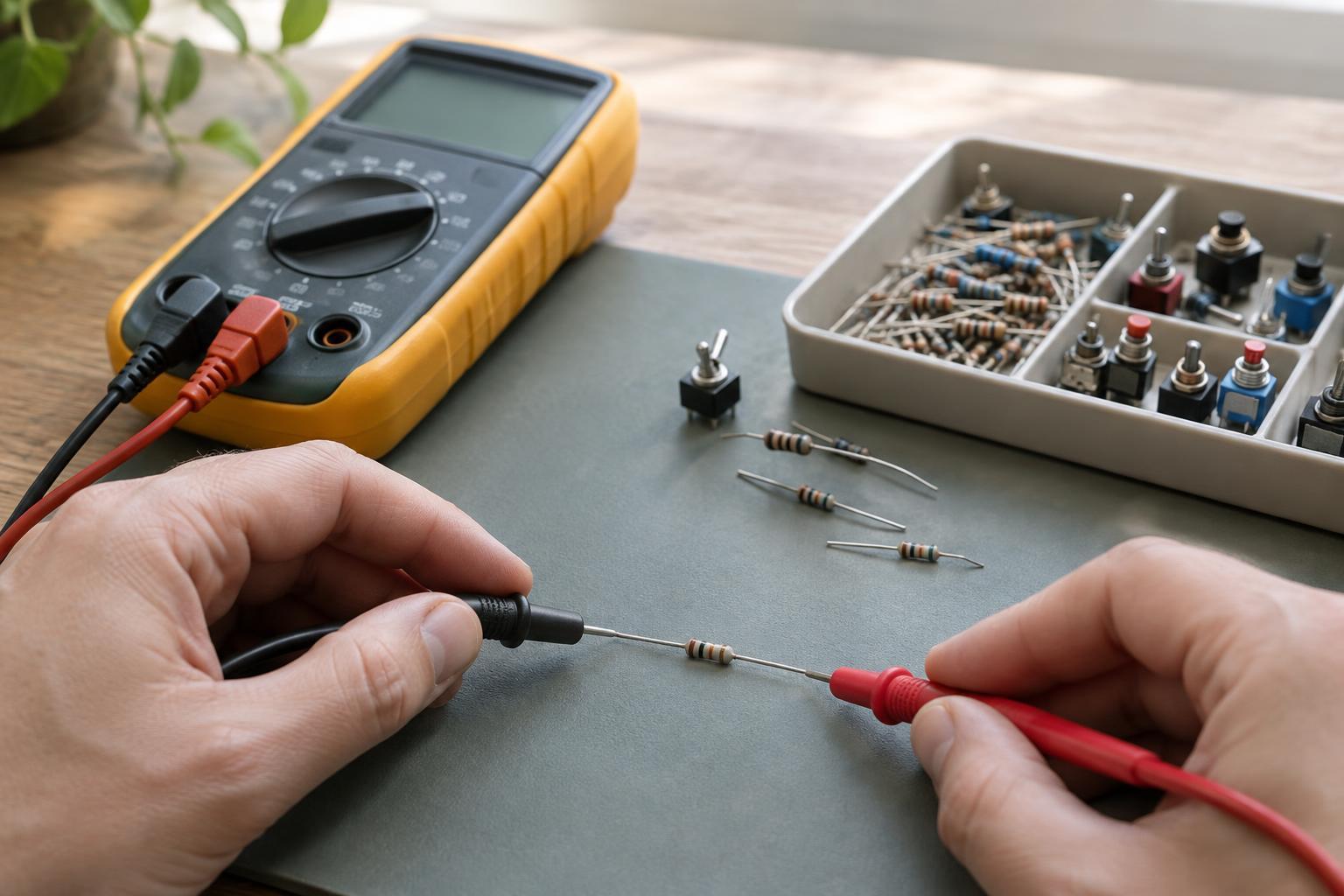
A salvaged component is not automatically a working component. Use a simple status on each label, such as “untested,” “checked,” or “fault suspected.” Record what a check actually established. For example, a continuity check on a switch can show that its contacts change state, but it does not prove that the switch will perform well in every circuit. Test only in an appropriate low-voltage setup when you understand the part and its connections.
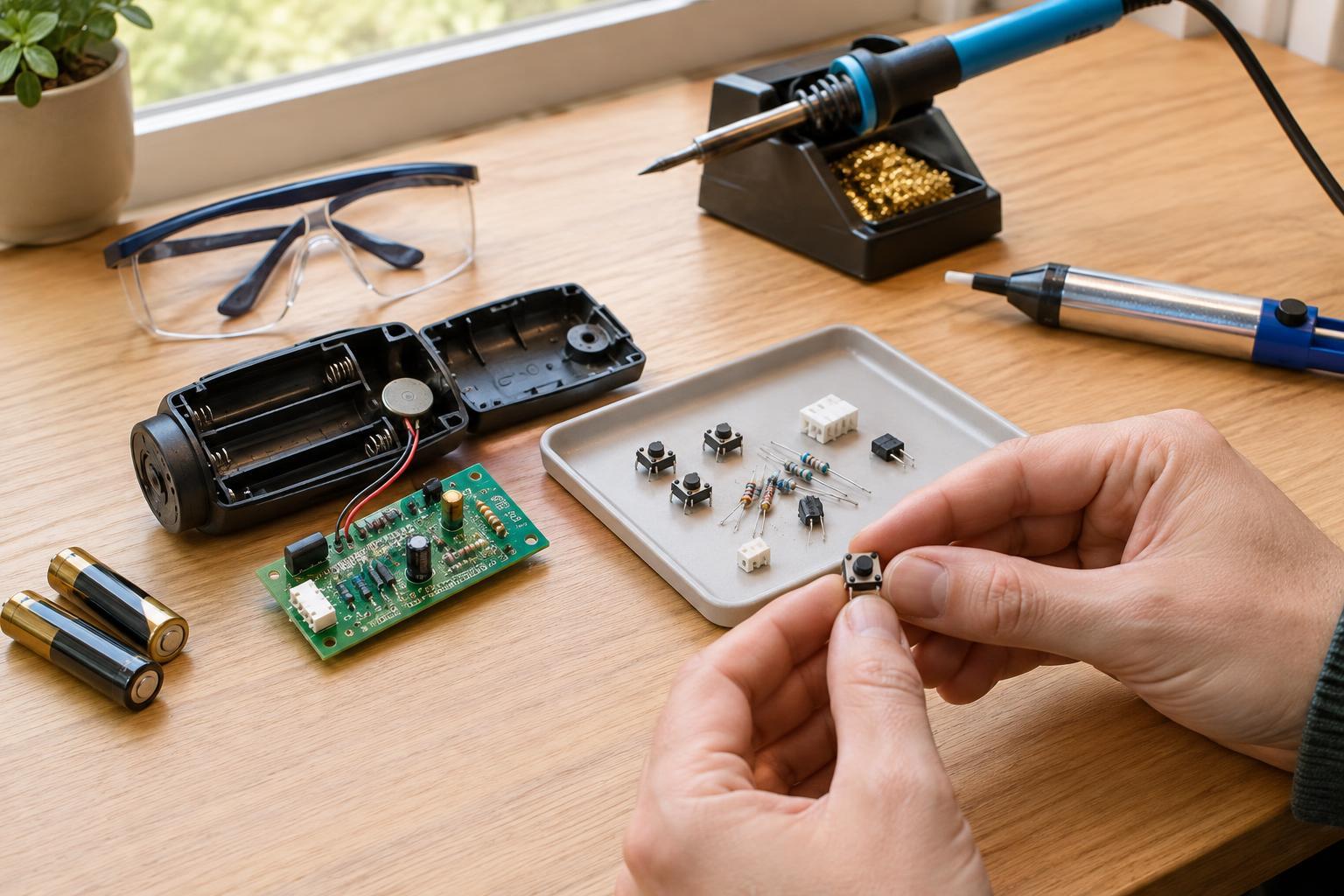
Make a separate place for questionable items. This can be a small container marked “inspect before use,” kept apart from parts you have checked. If a part later fails a test, update its label immediately or remove it from reusable stock. For boards with several useful components, consider keeping the board intact until you need a specific part; its printed markings can preserve clues that would be lost after removal.
Build a system you will maintain
Organize by how you look for parts, not by an elaborate scheme you will abandon. Broad groups such as connectors, switches, LEDs, motors, fasteners, and unidentified parts are enough to start. Within a group, sort further only when the quantity makes searching difficult. Keep a pen and blank labels near your storage area so a newly recovered item never becomes an anonymous addition to a drawer.
Review the collection occasionally. Combine duplicate containers, replace faded labels, and check whether loose items have escaped their packaging. Recycle parts you cannot safely identify or are unlikely to use through an appropriate electronics collection route where available. The aim is not to keep everything: it is to maintain a collection in which each part can be found, handled safely, and chosen with a realistic understanding of what is known about it.