Pressure is always measured against something
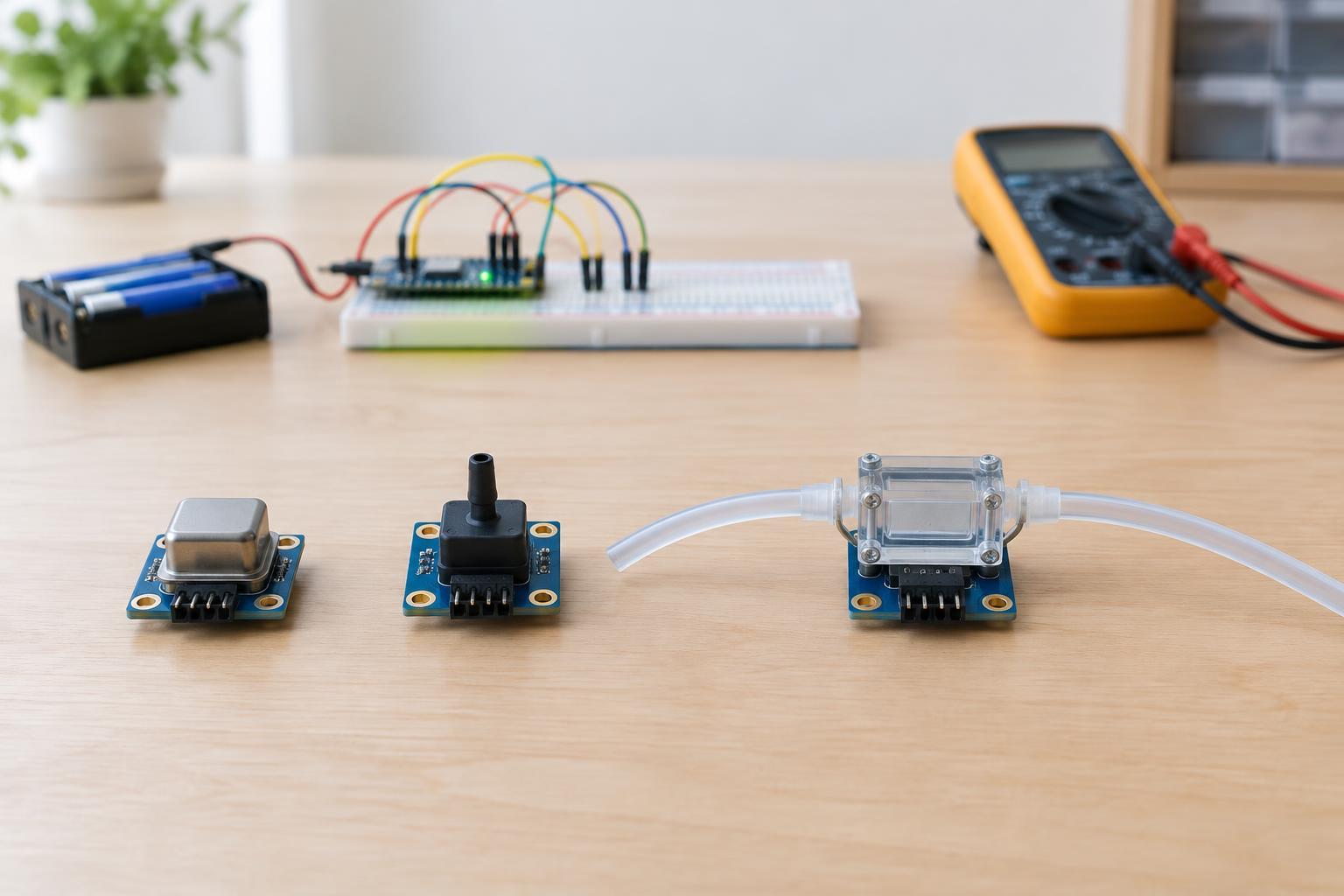
A pressure reading makes sense only when you know its reference. Absolute pressure uses a vacuum as its zero point. Gauge pressure uses the surrounding atmosphere as its zero point. Differential pressure compares two points directly. A sensor marked “pressure” may provide any one of these readings, so its type matters as much as its range.
Picture a closed container sitting in a room. An absolute sensor reports the pressure inside relative to a vacuum. A gauge sensor reports how much higher or lower the container pressure is than the room air. A differential sensor could compare the container with the room, producing a similar reading to a vented gauge sensor, or compare the container with a second chamber instead. The physical pressure has not changed; only the reference has.
When an absolute reading is useful
Choose absolute pressure when the application needs pressure relative to a stable zero rather than to local air. Barometric measurements are a familiar example: an absolute sensor can track changes in atmospheric pressure. Absolute readings can also be useful in sealed systems where a calculation depends on the total pressure inside, not just its difference from the surroundings.
An absolute sensor exposed to ordinary room air will not read zero. Its reading includes atmospheric pressure. That can surprise someone testing a new sensor on a workbench, especially if they expected a value near zero with nothing connected. Check whether a device reports absolute units in its data sheet or software interface before treating a nonzero reading as a fault.
When gauge or differential pressure fits better
Gauge pressure is often the intuitive choice when you care about pressure relative to the air around a device. Tire pressure is commonly expressed this way: an uninflated tire open to the room would have approximately zero gauge pressure. A gauge sensor can also show pressure below ambient as a negative reading, provided its specified range supports it. Negative gauge pressure does not mean negative absolute pressure.
A vented gauge sensor uses an opening or passage to reference the surrounding air. Some sensors instead use a sealed reference and are described as sealed-gauge sensors; their readings may not follow changes in local atmospheric pressure in the same way. This distinction can matter when the surrounding pressure varies, so look beyond the word “gauge” in the product description.
Choose a differential sensor when the difference between two particular locations is the measurement you want. For example, measuring the pressure drop across a low-pressure air filter calls for one connection on each side. The sensor can report that difference without requiring two separate absolute sensors and a subtraction in software. Note which port is designated high and which is low: reversing them may change the sign of the reading or exceed a port’s specified limits.
Choose the reference before the range
Start by finishing the sentence “I need to know the pressure compared with…” If the answer is a vacuum, consider absolute. If it is the surrounding air, consider gauge. If it is another point in the system, consider differential. Then choose a range that covers the expected readings, including possible negative readings and brief changes during normal operation. A sensor with an unnecessarily broad range may make small changes harder to resolve.
Next, check the details that affect the measurement: compatible gas or liquid, allowable pressure at each port, output type, supply voltage, and whether tubing or a vent must remain open. For digital sensors, confirm what units and pressure reference their reported values use. For analog sensors, do not assume that a zero-voltage output means zero pressure; the output may have an offset or a limited operating span.
These distinctions also matter when comparing readings. In approximate terms, absolute pressure equals gauge pressure plus local atmospheric pressure when both readings describe the same point and the gauge sensor is properly referenced to that atmosphere. A differential reading equals the pressure at one port minus the pressure at the other, according to the sensor’s port convention. Converting between types requires knowing the reference pressure, not just changing the unit label.
Test within safe limits
For a beginner low-voltage project, start with a sensor and gentle air-pressure changes that stay within every stated rating. Follow the manufacturer’s supply-voltage and wiring information, and keep any atmospheric vent unobstructed. Do not test an unknown sensor by connecting it to compressed-gas equipment, a refrigerant line, a pressurized vessel, or a household utility line. Avoid mains-powered equipment and hazardous fluids.
If a reading looks wrong, first confirm the sensor type, units, port connections, and expected value at rest. An absolute sensor in room air, a gauge sensor open to room air, and a differential sensor with both ports exposed to the same room should not all display the same number. Understanding what each sensor calls zero is usually the quickest way to decide whether the device is working as intended.