Why battery condition matters
Lithium-ion batteries power many phones, laptops, tools and small electronics. An intact battery can often be collected through a battery recycling program, but a damaged one may need different handling. Damage can increase the risk of overheating or fire, especially if a battery is crushed, short-circuited or charged after a fault appears.
You do not need to determine exactly what failed inside a battery. The useful decision is whether it looks or behaves normally enough to leave in service. If you suspect damage, stop using and charging the device while you work out how to hand it over safely. This article covers observation and disposal planning, not battery repair. Do not open a battery pack to inspect its cells.
Warning signs you can spot without testing
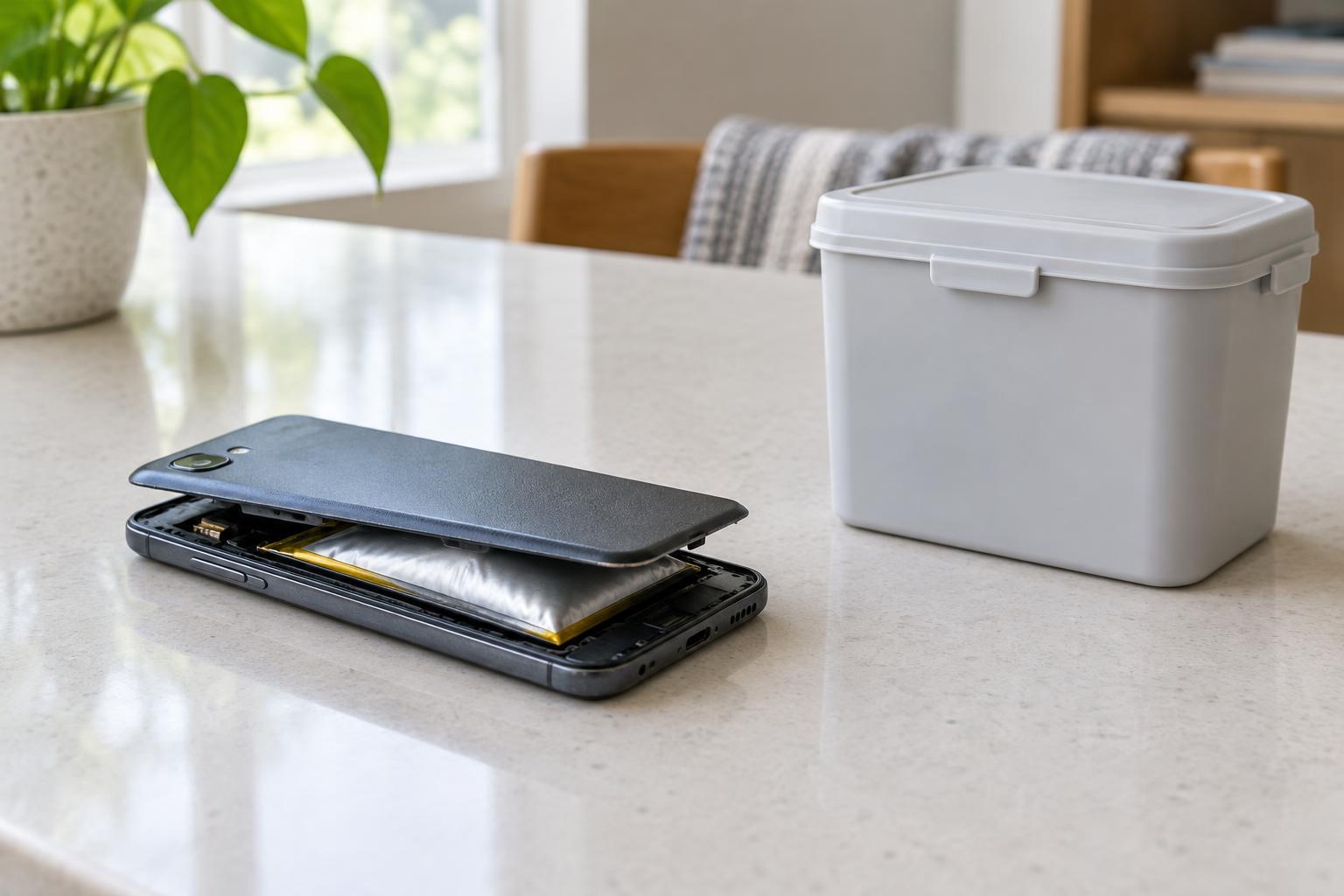
Look for swelling, a bulging device case or a screen or panel that has started to lift. Other visible warnings include a puncture, cracks in the battery casing, exposed internal material, liquid residue or connectors that appear badly damaged. A battery that has been crushed or soaked deserves caution even if its exterior looks normal.
Behavior can also be a warning. A device or battery that becomes unusually hot during ordinary use or charging, produces an unfamiliar chemical smell, makes a hissing sound, or emits smoke needs immediate attention. Rapid loss of runtime or unexpected shutdowns can have several causes; they do not prove that a battery is physically damaged. They are still reasons to stop and seek a qualified assessment if they occur alongside heat, swelling or other warning signs.
Do not squeeze a swollen case, puncture a battery to release pressure, or charge it again to see whether the problem repeats. Avoid trying to remove a glued-in or tightly fitted battery: forcing it out can cause the damage you are trying to avoid.
What to do before arranging disposal
If the device is safe to touch, switch it off and disconnect its charger. Keep a suspect battery away from paper, fabric and other easily ignited materials, and avoid leaving it in a hot car or in direct sun. If it is smoking, hissing, rapidly heating or burning, move away, keep others clear and contact local emergency services. Do not carry an actively failing battery to a collection point.
For a removable battery that is cool, intact and not leaking or swollen, follow the collection service’s instructions for preventing its exposed terminals from touching metal or other batteries. This may involve covering the terminals with nonconductive tape or placing each battery in a separate bag. Do not tape over evidence of damage to make a battery appear acceptable.
If the battery is swollen, leaking or visibly damaged, ask the receiving service how to hold and transport it before moving it. If it is built into a device, leave the device assembled unless a qualified repair or collection service directs otherwise. These are low-voltage handling precautions, not an invitation to work on mains-powered equipment or dismantle a battery pack.
Finding a service that accepts the battery
Start with your local waste authority or an established battery, electronics or household hazardous-waste collection program. Retail take-back and manufacturer programs may also be options. Acceptance rules vary by location and by service, so check the program’s published guidance or contact it before making a trip. A general battery drop-off box may not accept swollen or damaged batteries.
Describe what you have: a loose battery or a battery still inside a device, its approximate size, and whether it is swollen, leaking, hot, punctured or otherwise damaged. Ask whether the service accepts that condition, whether an appointment is needed, and how it wants the item prepared and delivered. Follow its instructions rather than putting a suspect battery in an unattended collection box.
Do not put lithium-ion batteries in ordinary household trash or routine mixed recycling. Avoid mailing one unless the receiving program explicitly permits it and provides packaging and shipping instructions appropriate to its condition. If the first service cannot take a damaged battery, ask it or your local waste authority where to take one instead.
Reuse begins with a safe decision
Reusing electronics can save useful parts from being discarded, but a questionable battery is not a good project component. Set aside plans to salvage, rebuild or repurpose a pack that shows signs of damage. A device may still be repairable by a qualified service, with the battery handled separately through an appropriate collection route.
The simplest rule is to avoid experimenting when a battery’s condition is uncertain. Observe without opening it, stop using it when warning signs appear, and confirm a suitable handover route before transport. That protects both the person handling the item and the workers who receive it.